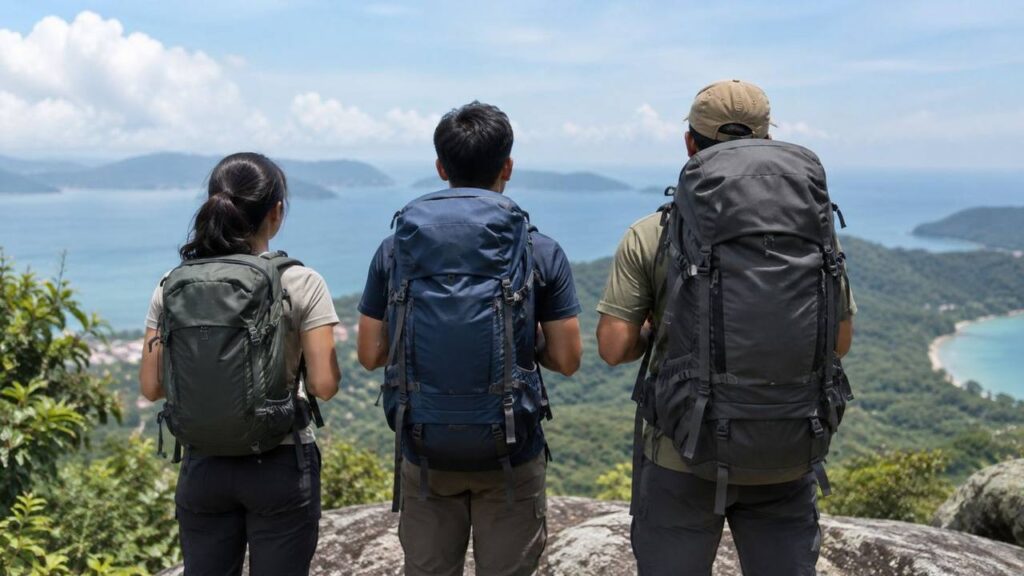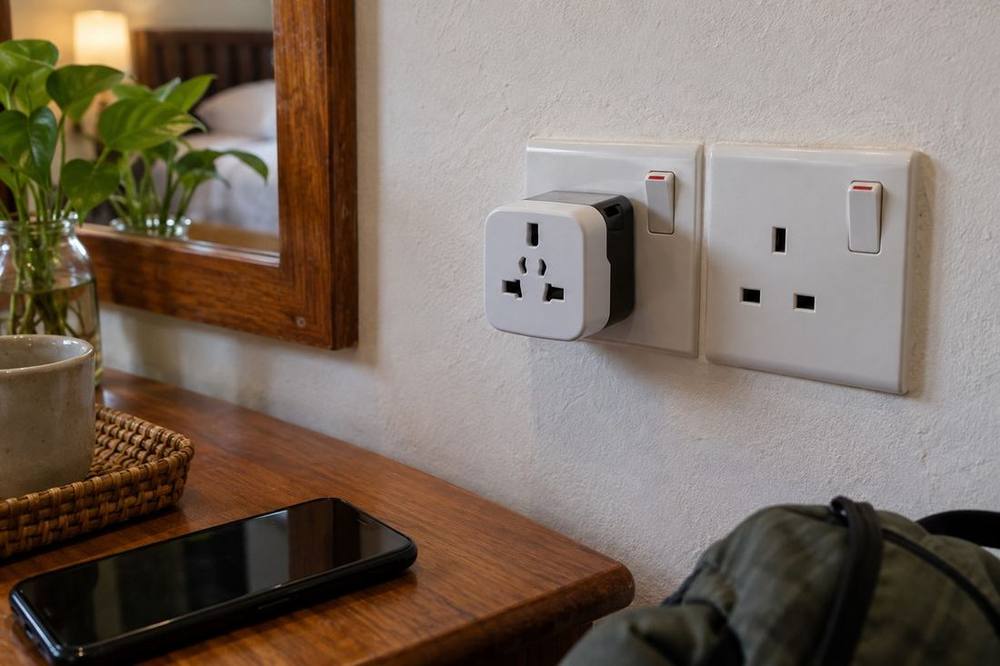

The rain in Malaysia does not drizzle politely. One minute you are walking to the bus station in sunshine, and ten minutes later the drains are overflowing and water is running off your backpack in sheets. If your passport and phone are in the top pocket, that is a bad moment.
The fix is to treat waterproofing as part of packing, not an afterthought. This guide covers the two tools that do most of the work, rain covers and dry bags, and how to use them together so your gear survives the wet season.
A common slip is keeping the passport, phone and power bank in the top lid or front pocket “for easy access”. Those pockets usually take the most rain. Move valuables deeper into the bag, inside a sealed bag of their own.
When the wet season hits Malaysia
Malaysia has two main monsoons, and they hit different parts of the country. According to MetMalaysia, the Northeast Monsoon runs from November to March. It brings heavy rain especially to the east coast states of Kelantan, Terengganu, Pahang and East Johor, plus Sarawak and Sabah.
The Southwest Monsoon, from late May to September, is relatively drier across most of the country. Sabah can still be wetter in this period, as MetMalaysia notes it gets the tail effects of typhoons.
Even outside the monsoons, afternoon storms are normal. Mulu National Park in Sarawak, for example, tells visitors to expect rain starting around 1pm to 5pm, usually lasting 30–60 minutes. So it makes sense to pack for rain all year, and pack harder for it from November to March.
Rain covers: what they do well
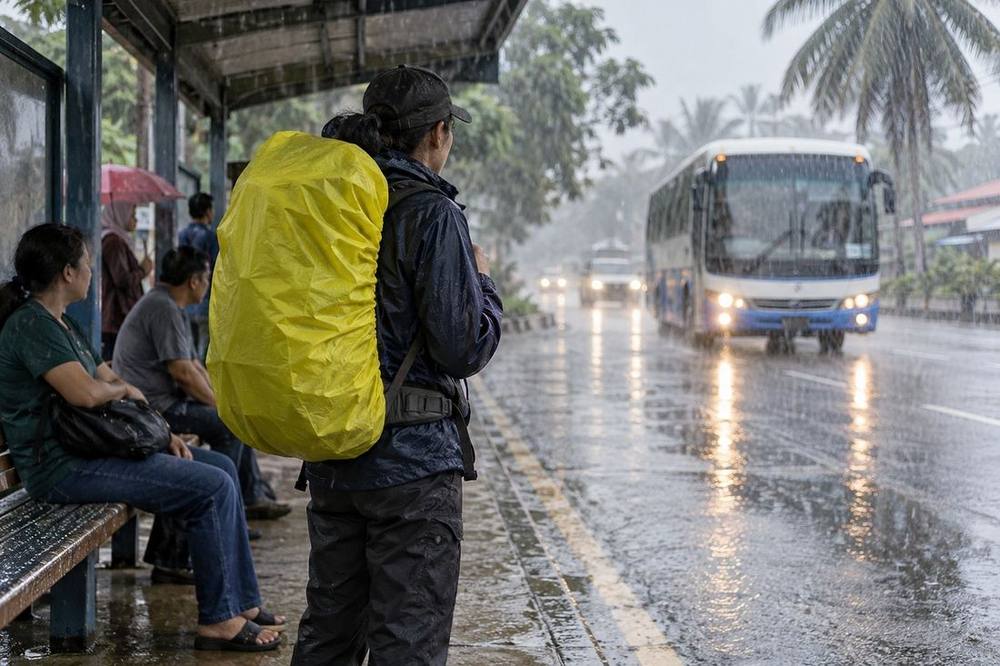
A rain cover is a fitted, stretchy hood of waterproof fabric that wraps around the outside of your backpack. Many come rolled up in a small pocket at the base of the pack. You pull it out, hook it over the top and bottom, and the elastic edge holds it in place.
Why they are useful
- They are fast. You can get one on in about 30 seconds while standing under a shop awning.
- They keep the pack fabric itself dry, so the bag does not get heavy and smelly.
- Bright colours (orange, yellow) make you easier to see on dark, rainy roads.
- They protect the pack from mud when you put it down at a jetty or bus stop.
Where they fail
A rain cover is not fully waterproof. The back panel, the part that sits against your body, is open. Water runs down your back and soaks into the pack from there. The straps also stay exposed, and water wicks along them.
Covers can also blow off in strong wind, which matters on open boat rides. On a speedboat to an island, clip yours down or take it off and use the dry bag method below instead.
Choosing the right size
Rain covers are sold by litre range, such as 20–35L or 40–55L. Check your pack’s volume and pick the cover that matches it. Too small and it will not stretch over a full bag. Too big and it flaps in the wind and collects water at the bottom.
Dry bags: the real protection
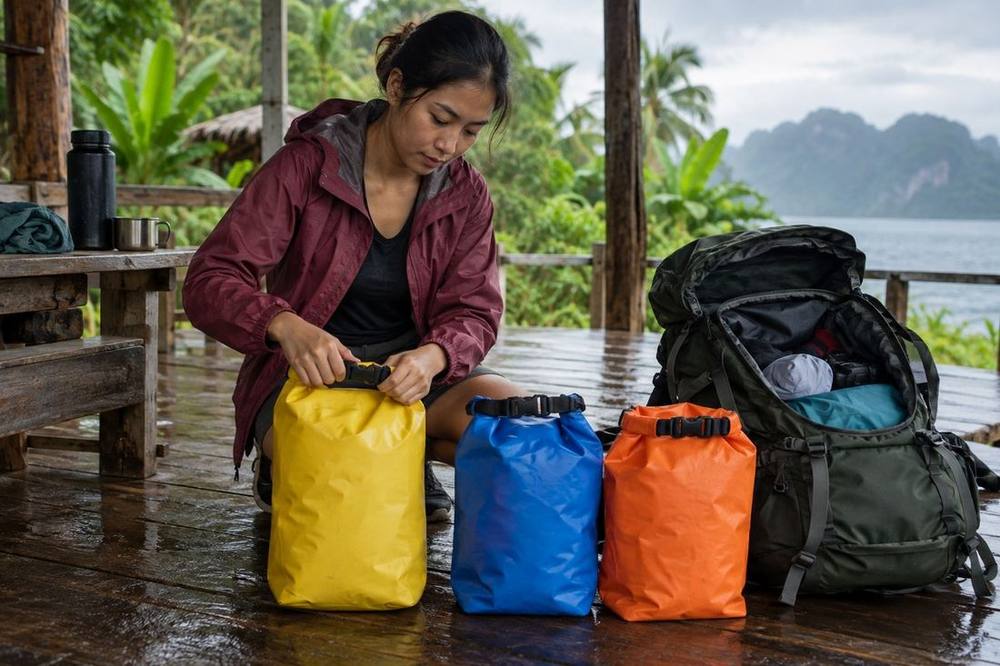
A dry bag is a waterproof sack with a roll-top closure. You put your things in, fold the top down at least three times, then clip the buckle. Done properly, it keeps water out even if the bag falls in a puddle.
There are two main kinds:
- Heavy-duty dry bags made from thick PVC. These are tough and good for boat trips and kayaking, but they are heavy and bulky.
- Lightweight dry sacks made from thin nylon with a waterproof coating. These are better inside your backpack because they weigh very little and fold flat.
How to use them inside your pack
Instead of one giant dry bag, try three or four small ones. Give each a job, and pick different colours so you can find things fast.
- Small (2–5L): passport, cash, cards, phone, power bank and charging cables.
- Medium (8–10L): spare clothes and sleepwear. Dry clothes at night matter a lot when everything else is damp.
- Medium (8–10L): electronics you do not need during the day, like a laptop or camera.
- Spare small bag: for wet swimwear or muddy socks, so they do not soak everything else.
This works well because even if water gets past the rain cover, the important things are sealed.
Pack liners are another option
A pack liner is a large dry bag shaped to fit inside your whole backpack. You put it in first, load everything inside, then roll the top closed. It is cheaper than buying several dry bags. The downside is that everything is in one space, so finding a single item means opening it up in the rain. A heavy-duty rubbish bag does a similar job in an emergency.
Rain cover vs dry bag: which one do you need?
Honestly, both. They solve different problems. Here is a quick comparison.
| Rain cover | Dry bags | |
|---|---|---|
| Keeps pack fabric dry | Yes | No |
| Fully waterproof | No (open back panel) | Yes, if rolled properly |
| Speed to use | Very fast | Packed in advance |
| Good on open boats | Can blow off | Yes |
| Weight | Light | Light (nylon) to heavy (PVC) |
| Protects from mud and dirt | Yes | Only what’s inside |
If you can only buy one, buy dry bags. A wet bag on the outside is annoying. A wet passport or a dead phone can ruin a trip.
Situations where you will be glad you prepared
Boat transfers
Island trips and river trips mean sitting low in a boat, with spray coming over the side. Your big pack often goes in a pile at the front, where the spray is worst. This is where dry bags inside the pack really matter.
Before you hand your bag to the crew, take out the small dry bag with your passport and phone and keep it on you.
Bus and train stations
Big bags often go into the luggage hold under long-distance buses. The hold can be wet and dirty, especially if it has been raining all day. A rain cover keeps your pack cleaner, and dry bags keep the inside safe if water pools in there.
Jungle and national parks
In places like Taman Negara or Mulu, rain is part of every day. Your daypack will get wet from rain, sweat and river crossings. A small dry bag inside your daypack keeps your phone and snacks safe. Mulu’s own packing advice includes a raincoat, which tells you how normal getting wet is there.
Walking around cities
A sudden storm in Kuala Lumpur or Penang can flood pavements in minutes. If you are carrying a small daypack, a compact rain cover or a simple dry bag liner saves your phone and paper tickets.
Small waterproofing extras worth packing
These are cheap and take almost no space:
- Zip-lock bags for passports, receipts and paper documents. Double-bag the passport.
- A waterproof phone pouch with a lanyard for boats and beaches.
- A small microfibre towel to dry your hands before handling electronics.
- Silica gel packets in your electronics bag to pull out humidity.
- A light rain jacket or poncho. A poncho that covers you and your backpack is a good budget option on walks.
- Spare plastic bags for wet clothes and shoes.
Forgot something? Basic ponchos, umbrellas and zip-lock bags are easy to find in convenience stores, pharmacies and local kedai runcit, especially once the rain starts.
Care tips so your gear lasts
Humidity in Malaysia is high, and wet gear goes mouldy fast. A few habits help:
- Dry your rain cover and dry bags in open air after each use. Never store them wet and rolled up.
- Turn dry bags inside out to dry the inner side.
- Do not over-stuff dry bags. A bag that is too full cannot roll down three times, and then it leaks.
- Keep a separate bag for wet things so they do not touch dry clothes.
Before each trip, fill each dry bag with air, roll it shut and squeeze. If it slowly goes flat, it has a leak and needs replacing.
A simple monsoon setup
If you want one easy plan for November to March on the east coast or in Borneo, use this:
- Pack liner or dry bags inside the main backpack.
- Small dry bag for passport, phone, cash and power bank.
- Rain cover clipped to the pack, ready to pull out.
- Light rain jacket at the top of the bag.
- Zip-lock bags for paper and a spare plastic bag for wet clothes.
It costs little and weighs almost nothing.
Next, check Jungle Trekking Packing List: What to Bring for Rainforest Hikes if you are heading into the rainforest, and Daypack essentials for city sightseeing for what to carry on wet city days. If you are still choosing a bag, read Carry-on-only backpacking: a one-bag packing list.
Sources
- MetMalaysia, Weather Phenomena (monsoon seasons): https://www.met.gov.my/en/pendidikan/fenomena-cuaca/
- Mulu National Park, Plan Your Trip (weather and packing list): https://mulupark.com/plan-your-trip/