
“How big should my backpack be?” is one of the most common questions first-time backpackers ask. The honest answer is: smaller than you think. Most people buy a huge pack for their first trip, fill it to the top, and spend the next two weeks carrying things they never use.
In this guide I compare the three sizes you will see most often in shops: 30 litres, 40 litres and 60 litres. I explain what fits in each, how they work with budget flights, and who each size is really for.
A common slip for first-timers is choosing the bag before the kit. You see a big pack on sale, buy it “just in case”, and then fill the empty space because it is there. A better order is to decide what you need first, then find the smallest bag that holds it.
What “litres” actually means
Backpack capacity is measured in litres. It tells you how much space is inside the main bag and pockets. A 40-litre pack holds about 40 one-litre bottles’ worth of stuff.
Two bags with the same number can still feel different. One may have a lot of space in outside pockets, the other in one big main compartment. Brands also measure in slightly different ways. So use the number as a guide, then look at the bag itself.
The quick answer
| Size | Typical trip | Carry-on friendly? | Best for |
|---|---|---|---|
| 30L | Weekend to 1 week, or longer if you pack very light | Usually yes | Minimalists, short trips, budget flights |
| 40L | 1 week to several months | Often, if packed carefully | Most backpackers in Malaysia |
| 60L | Camping, treks, or carrying lots of gear | No, it needs to be checked | Hikers, campers, long trips with cold-weather stops |
REI, the US outdoor retailer, gives these ranges for hiking packs: 30–50 litres for 1–3 nights, 50–80 litres for 3–5 nights, and 70 litres or more for longer trips. Those numbers assume you carry a tent, sleeping bag and food. When you sleep in hostels and homestays and eat at mamak stalls, you need much less space.
Airline cabin limits: why weight matters most
Before choosing a size, check the cabin baggage rules for the airlines you plan to fly. Every airline sets its own limits, and they do change, so look at the airline’s own baggage page close to your travel date. Many budget airlines allow around 7kg in the cabin, often shared between a main bag and a small personal item that fits under the seat.
That means weight is often the real limit, not just size. A 40-litre bag stuffed full can easily go past 7kg. A 60-litre bag almost always will.
REI notes that a 35-litre travel pack will meet most airline limits. Many travel packs around 40 litres are also designed to fit common cabin bag sizes, but always measure the bag yourself when it is full and compare it with your airline’s numbers. A soft pack can bulge past the limit.
30L: the light traveller’s choice
What fits
A 30-litre bag holds:
- 3–4 tops and 2 pairs of shorts or trousers
- Underwear and socks for a few days
- A light rain jacket
- A small toiletries bag
- Flip-flops
- A phone charger, power bank and maybe a small tablet
That is enough for a week in Malaysia if you wash clothes as you go. Many homestays and towns have laundry shops, and quick-dry clothes dry fast in our heat.
Pros
- Easy to stay within a budget airline cabin limit
- Fits in overhead bins and under bus seats
- Light and easy to carry on hot days
- Can double as a daypack
Cons
- No room for bulky items like a hoodie for cold buses, a camera with lenses, or shopping
- Hard to fit snorkel gear or hiking boots
Who it suits
Weekend trips, short city breaks, and confident minimalists on longer trips. If you are hopping from KL to Melaka to Ipoh for a few days, 30 litres is plenty.
40L: the sweet spot for most backpackers
What fits
Everything in the 30L list, plus:
- A few extra outfits, including something tidier for a nice dinner or visiting a mosque
- A light jacket or hoodie for air-conditioned buses and the Cameron Highlands
- A small packable daypack
- Snorkel mask or a lightweight towel
- Room for a few souvenirs
Pros
- Enough space for long trips if you do laundry
- Many travel packs at this size are built for cabin limits
- Usually has a proper hip belt and frame
Cons
- Easy to fill past a budget airline’s weight limit, so you need to be strict
- Bigger and heavier than a 30L when walking around all day
Who it suits
This is what I would recommend to most people backpacking around Malaysia, whether for one week or several months. You get comfort and some room to spare, and you can still try to fly carry-on.
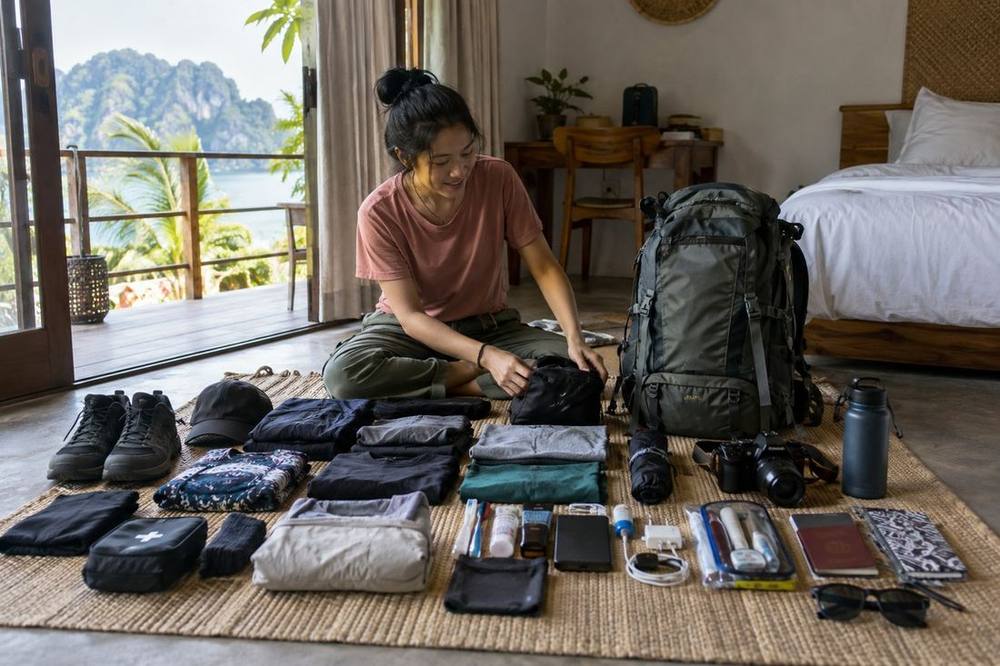
A typical 40L packing list for two to four weeks in Malaysia looks like this:
- 4 quick-dry tops and 1 long-sleeved shirt
- 2 pairs of shorts and 1 pair of light trousers or a long skirt
- 5 sets of underwear and 3 pairs of socks
- A light hoodie for cold buses and the highlands
- A packable rain jacket and a compact umbrella
- Flip-flops plus one pair of walking shoes (worn, not packed)
- A microfibre towel and a small toiletries bag
- A tech pouch with charger, cables and power bank
- A folded daypack
If that list fills your bag to the brim, the bag is about right. If you still have half the space empty, you could go smaller.
60L: for hikers, campers and heavy packers
What fits
A 60-litre bag can take all of the above, plus:
- A tent or hammock
- A sleeping bag or liner
- Cooking gear and food for a trek
- Bulky cold-weather clothes for other countries on a longer trip
Pros
- Lots of space for camping or mixed trips
- Built for heavy loads, with strong hip belts and frames
- Good for long trips that include cold places as well as Malaysia
Cons
- Will not go in the cabin, so you pay for checked baggage on budget flights
- Heavy when full, and awkward on buses, ferries and in hostel dorms
- Tempts you to pack far too much
Who it suits
People who will camp or trek with their own gear, such as an overnight jungle trip where you carry everything. For hostel-based travel in Malaysia, 60 litres is usually more than you need.
Before you buy a 60L pack, ask yourself three questions:
- Will I carry a tent, sleeping bag or cooking gear on this trip?
- Will I visit somewhere cold enough to need bulky layers?
- Am I happy to pay for checked baggage on every flight?
If you answer “no” to all three, a 40L bag will almost certainly do the job. Many travellers who start with a 60L end up posting things home or leaving clothes behind in hostel donation boxes.
A simple test before you buy
Here is the method I suggest:
- Lay out everything you think you need for your trip on your bed.
- Remove a third of it. Really.
- Put what is left into packing cubes or bags.
- Take those to the shop and try them in different sizes of backpack.
- Pick the smallest bag that fits everything with a little room for souvenirs.
Then weigh the packed bag at home with a luggage scale. If you want to fly carry-on, you now know whether you can stay within your airline’s limit.
Don’t forget the daypack
Whatever size you choose, you will also want a small bag for day trips. Some travellers carry a 30L main bag plus a tiny packable daypack. Others use a 40L bag and a 15–20L daypack. On many budget airlines, a small daypack can count as your personal item if it fits under the seat, but check whether its weight counts towards your total cabin allowance.
REI calls 21–35 litres the “sweet spot” for most hiking and travel daypacks, but for city days in Malaysia a smaller bag usually works fine.
Size is only half the story
The right size will not help if the bag does not fit your body. Torso length, a good hip belt and a breathable back panel matter just as much in our heat. Read How to Choose a Backpack for Travel: A Practical Guide for the full checklist, and Types of Backpacks: Which One Suits Your Kind of Trip? if you are still deciding on the style.
My advice for a first trip: start with around 40 litres, pack it, weigh it, and take out anything you are unsure about. You can always buy a forgotten item at the nearest kedai runcit, but you cannot un-carry an extra 3kg.
Sources
- REI, “How to Choose a Backpack: Sizing & Fit Guide”: https://www.rei.com/learn/expert-advice/backpack.html
- REI, “Daypacks: How to Choose”: https://www.rei.com/learn/expert-advice/daypack.html
- REI, “The 7 Best Travel Backpacks of 2026”: https://www.rei.com/learn/expert-advice/best-travel-backpacks.html