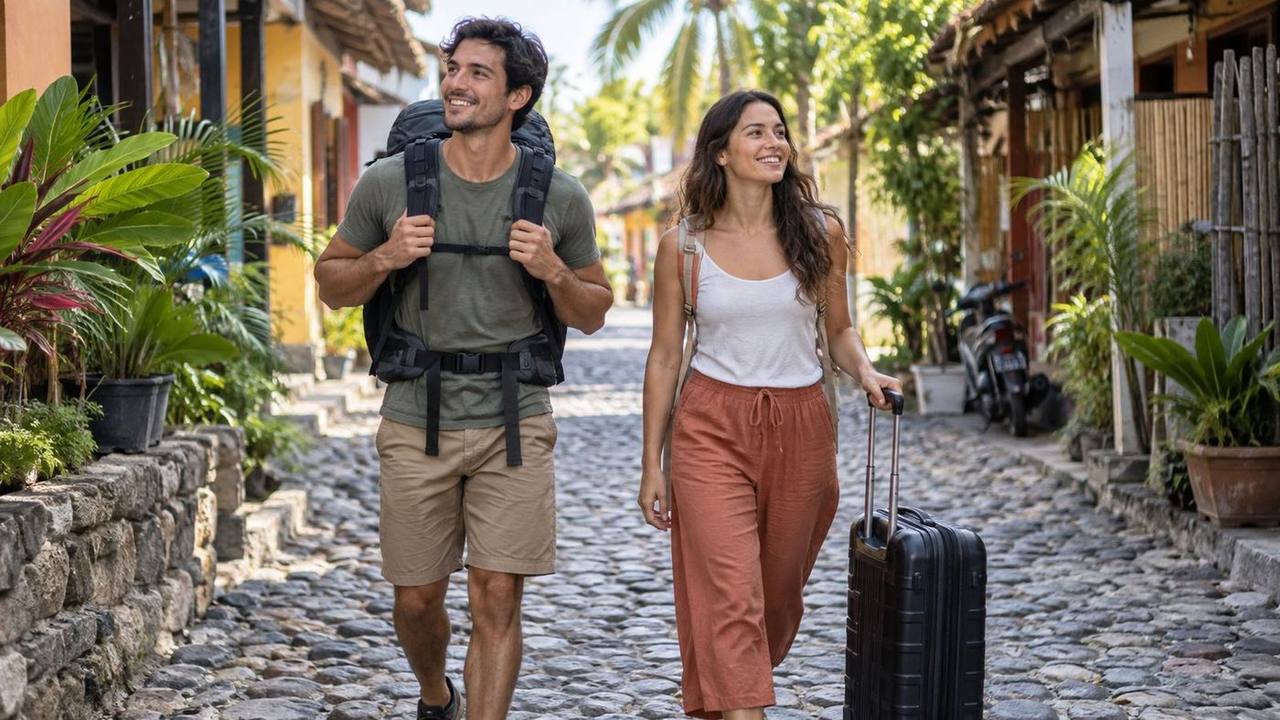
Imagine dragging a hard suitcase along a five-foot way in Ipoh old town. Step up, step down, a drain cover, a broken tile, another step. The wheels clatter and the handle twists in your hand. Meanwhile, the backpacker next to you just keeps walking.
That does not mean a suitcase is always wrong. It depends on where you are going and how you travel. Here is how I think about backpack vs suitcase for a trip around Malaysia.
A quick way to decide is to picture one normal travel day on your route. Count the stairs, the bus changes, the boat rides and the walk from the last stop to your bed. The more of those there are, the more a backpack makes sense.
The short answer
If you will move often, take ferries, use buses and walk from stations to your homestay, a backpack is usually easier. If you are staying in one or two city hotels and moving mostly by car or Grab, a suitcase works fine.
| Situation | Backpack | Suitcase |
|---|---|---|
| Island ferries and small boats | Much easier | Awkward to lift and keep dry |
| Old-town streets and five-foot ways | Easy | Bumpy, many steps |
| Long-distance buses | Fits in the hold or overhead rack | Hold only, harder to lift |
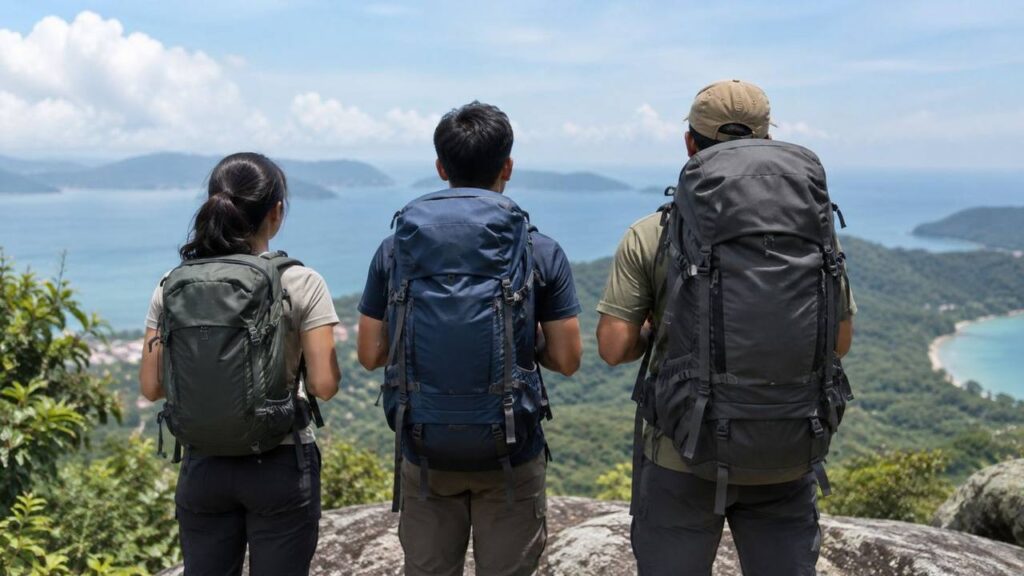
| Jungle and highland trips | Built for it | Not practical |
| Business trip or city hotel stay | Clothes crease more | Neat and organised |
| Carrying souvenirs and shopping home | Space runs out fast | Hard shell protects items |
| Rainy season | Needs a rain cover | Hard shell copes well |
Why a backpack wins for most Malaysia trips
Your hands stay free
With a backpack, both hands are free for your phone, a map, a ticket, or a teh tarik in a plastic bag. You can hold the rail when you climb onto a bus or step down into a boat. That sounds small until you are juggling a suitcase handle, a daypack and your boarding pass at the same time.
It goes where wheels cannot
Wheels love smooth airport floors. Malaysia has plenty of places that are not smooth: sandy beaches, gravel paths at homestays, grass, wooden jetties, stairs at older bus terminals and hill trails in places like Fraser’s Hill or the Cameron Highlands.
OrthoInfo, the patient website of the American Academy of Orthopaedic Surgeons, advises carrying rolling luggage up stairs rather than dragging it. So every flight of stairs means lifting the whole suitcase by hand. With a backpack, it is already on your back.
Island boats and ferries
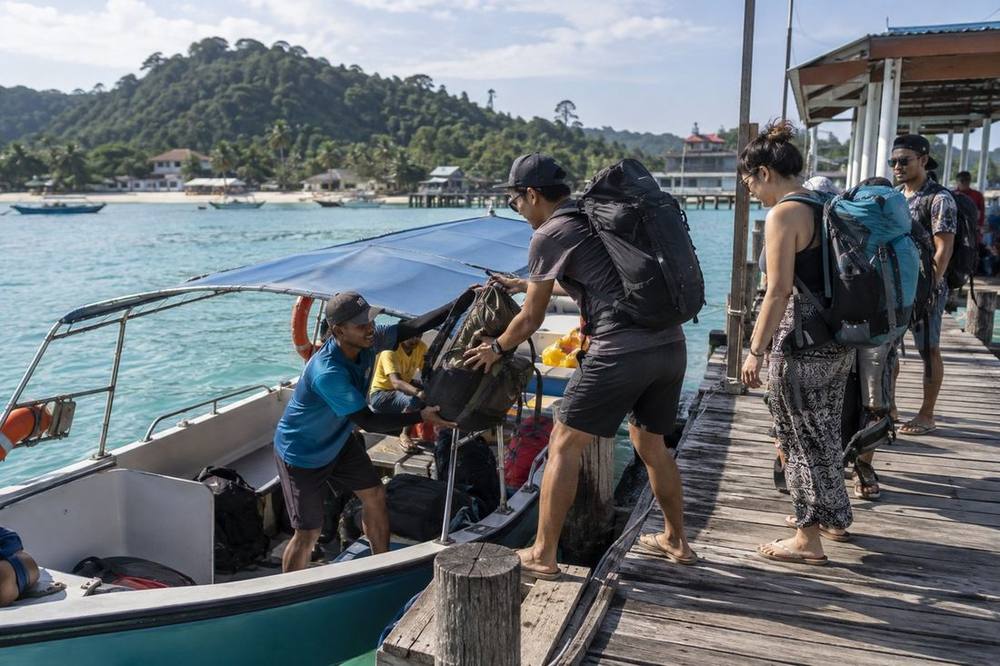
Getting to many islands means climbing into a small boat, sometimes from a jetty and sometimes from the beach. A backpack can be passed from hand to hand or kept on your lap. A large suitcase is heavy to lift over the side and can end up sitting in water at the bottom of the boat.
A few habits help on any boat transfer, whatever bag you carry:
- Pack your passport, phone and cash in a small dry bag before you reach the jetty.
- Fit a rain cover or line the bag with a bin liner, as boat floors are often wet.
- Keep a hand free to hold the boatman’s arm or the rail as you step in.
- Watch where the crew stacks the bags, and ask for yours to go on top if it holds electronics.
Easy to stow on buses and trains
A soft backpack squeezes into odd spaces: an overhead rack, the floor at your feet, the corner of a hostel locker. A hard suitcase is a fixed shape, so it either fits or it does not.
Better for budget flights
Many backpackers fly around Malaysia on budget airlines. AirAsia allows two pieces of cabin baggage with a combined weight of 7kg, with the main bag no bigger than 56cm x 36cm x 23cm (AirAsia newsroom advisory; the same limits listed on klia2.info, checked October 2026).
A soft backpack can be compressed to fit those measurements. A hard suitcase cannot squash down, and its wheels and handle add weight before you pack anything. Many cabin suitcases are also sized for other airlines’ rules, so measure yours.
Comfort over longer distances
A well-fitted backpack puts most of the weight on your hips, which are much stronger than your arms. REI says 80 percent or more of a pack’s weight should rest on your hips. Carrying a suitcase by the handle up stairs puts it all on one arm.
If you are not sure how to set up the straps, see How to Wear a Backpack the Right Way (and the Mistakes to Stop Making).
Organised in its own way
Old travel advice often says backpacks are more organised because of their pockets. In practice, it depends on the bag. Good travel packs now have clamshell openings that unzip all the way round, like a suitcase, plus small pockets for passports and cards. Add packing cubes and a backpack can be just as tidy.
Where a suitcase is the better choice
I want to be fair here. There are times I would pick a suitcase.
City breaks with one hotel
If you fly into KLIA, take a taxi to a hotel in Bukit Bintang, and stay put for five days, wheels are perfect. Airports, malls and hotel lobbies are smooth and usually have lifts.
Formal clothes
If you are going to a wedding or work event, a suitcase keeps a baju kurung, kebaya or shirt flatter and less creased.
Fragile things and shopping
If you plan to bring home things like local coffee, kuih in tins or pottery, a hard case protects them better. Some travellers bring a backpack out and buy a cheap suitcase for the trip home.
Heavy loads and some health conditions
If you have back or shoulder problems, rolling a bag may hurt less than carrying it. OrthoInfo suggests luggage with wheels and handles and packing light. Speak to your doctor if you are not sure what is safe for you.
A typical example is a family trip to a cousin’s wedding in Kuching or Kota Bharu. You fly in, stay with relatives or in one hotel, and need formal outfits and gifts to arrive in good shape. Here a suitcase is simply the better tool, and nobody will be climbing into a boat with it.
What about the rain?
Malaysia’s weather can change fast. MetMalaysia says the Northeast Monsoon runs from November to March and brings heavy rain, especially to the east coast states of Peninsular Malaysia, west Sarawak and east Sabah.
A hard-shell suitcase keeps rain out well, as long as it is not sitting in a puddle. Most backpacks are only water-resistant, so you need a rain cover and some dry bags inside. A good habit is to keep your passport and electronics in a zip bag, whatever you carry.
Safety and security
Neither option is perfect. Suitcases often have built-in locks, which is handy in hotel rooms. Backpacks can be opened from behind in a crowd, so in busy places like night markets or the LRT, keep valuables in a front or hidden pocket, or wear a daypack on your front.
For hostel stays, bring a small padlock for the locker. Backpacks fit hostel lockers more easily than most rigid suitcases.
The hybrid option
If you cannot decide, there are wheeled backpacks. They have wheels and a handle like a suitcase, plus shoulder straps that zip out when you need them. The trade-off is weight: the wheels and frame make them heavier than a normal backpack, which matters with a 7kg cabin limit. The straps are often thinner too, so they are not great for long walks.
Another popular setup is a mid-sized backpack plus a small daypack. The big bag goes in the overhead bin or bus hold, and the daypack comes with you on day trips.
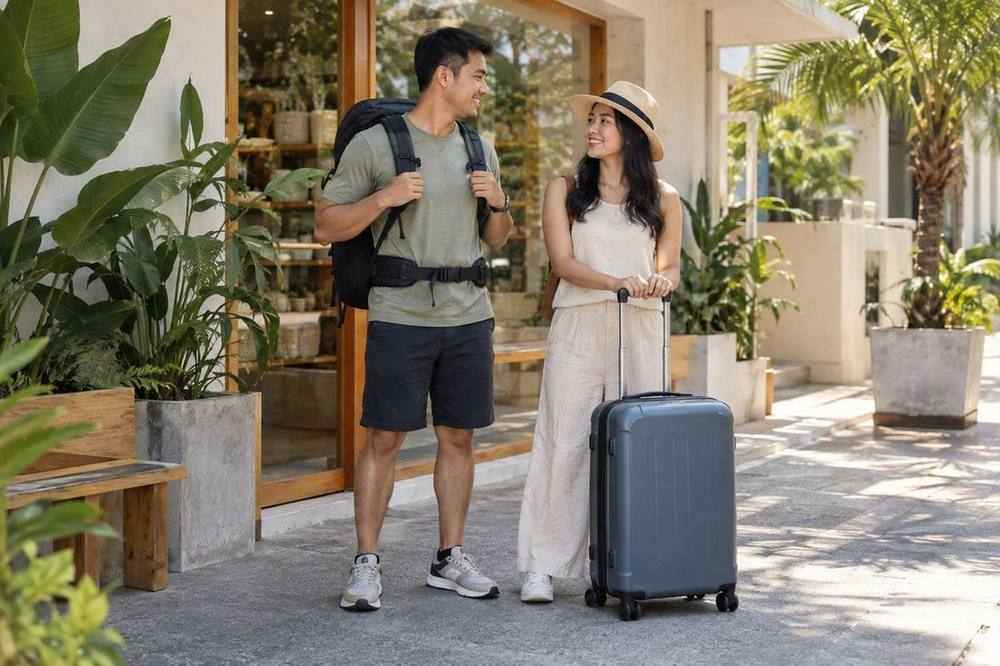
My verdict
For backpacking Malaysia, with buses, ferries, homestays and old-town streets, a backpack is the better choice nearly every time. Save the suitcase for city-only trips and family holidays.
If you are leaning towards a backpack, start with How to Choose a Backpack for Travel: A Practical Guide and then check the size in 30L vs 40L vs 60L: Which Backpack Size Do You Need?. Before you buy anything, picture the hardest part of your route, a jetty, a staircase or a muddy path, and ask which bag you would rather be carrying there.
Sources
- OrthoInfo (American Academy of Orthopaedic Surgeons), “Tips for Lifting and Carrying Luggage”: https://www.orthoinfo.org/staying-healthy/tips-for-lifting-and-carrying-luggage/
- REI, “How to Choose a Backpack: Sizing & Fit Guide”: https://www.rei.com/learn/expert-advice/backpack.html
- AirAsia Newsroom, “AirAsia Travel Advisory: Cabin Baggage Allowance Update”: https://newsroom.airasia.com/news/2020/7/6/airasia-travel-advisory-cabin-baggage-allowance-update
- klia2.info, “Baggage Information for AirAsia Flights”: https://www.klia2.info/airlines/airasia-baggage-info/
- MetMalaysia, “Weather Phenomena”: https://www.met.gov.my/en/pendidikan/fenomena-cuaca/