
The first thing you notice at a village homestay is the quiet. No traffic, no mall music, just chickens, a radio somewhere and the evening call to prayer drifting over the fields. Then someone calls you to eat, and the quiet is over.
A homestay is not a hotel with a family attached. It is a family’s home with a space for you in it. Once you understand that, almost everything else about what to expect at a homestay makes sense: the shared bathroom, the dinner time you did not choose, the auntie who asks if you are married before you have finished your tea.
Here is what is usually included, how to choose and book, and how to be a guest the family is happy to see again.
What is a homestay?
On booking apps, “homestay” can mean anything from a whole rented house with no host in sight to a spare room in someone’s flat. That is not the experience I mean here.
A true homestay means you sleep in a local family’s home (or right next to it), eat with them and take part in their daily life. The family is your host, not just your landlord.
Some countries run official homestay programmes to support rural communities. Malaysia’s Ministry of Tourism, Arts and Culture (MOTAC) runs one, where village families register as hosts and work together as a group with a local coordinator who handles bookings and activities. Registered hosts are checked before they can join. This is a good place to start, because someone has checked the homes and there is a named contact if something goes wrong.
Other homestays are simply families renting out a room. These can be lovely too, but you need to do more checking yourself.
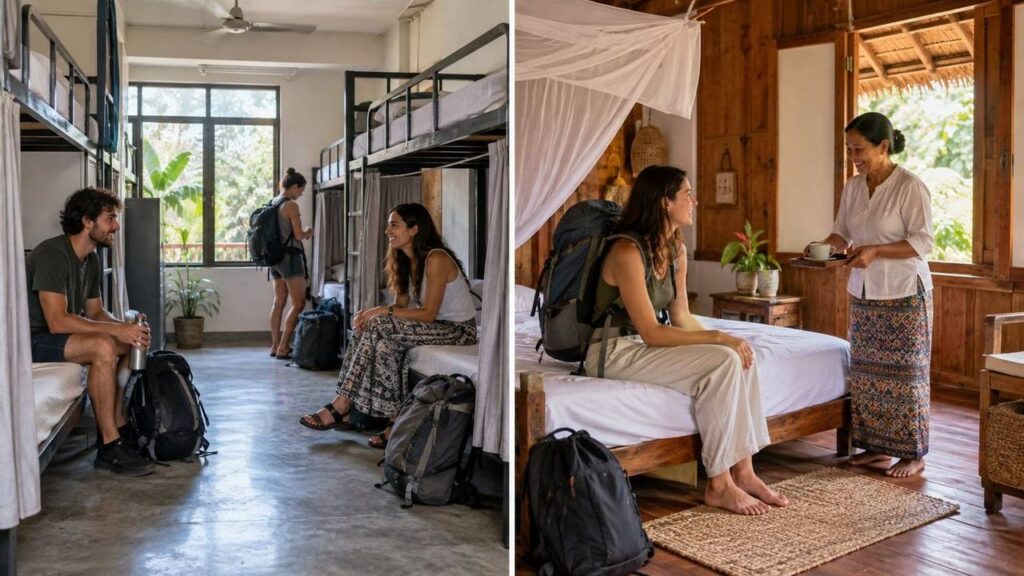
If you are still deciding between this and a dorm bed, read Hostels vs Homestays: Which Should You Choose? first.
What a typical stay looks like
Every family is different, but most stays share a few things.
Arrival
In a village programme, guests are sometimes welcomed as a group with a drink or a short performance. With a single family, it is usually just a warm hello at the door and a tour of the house. Expect lots of questions about your family and your job. This is friendliness, not nosiness.
Your room
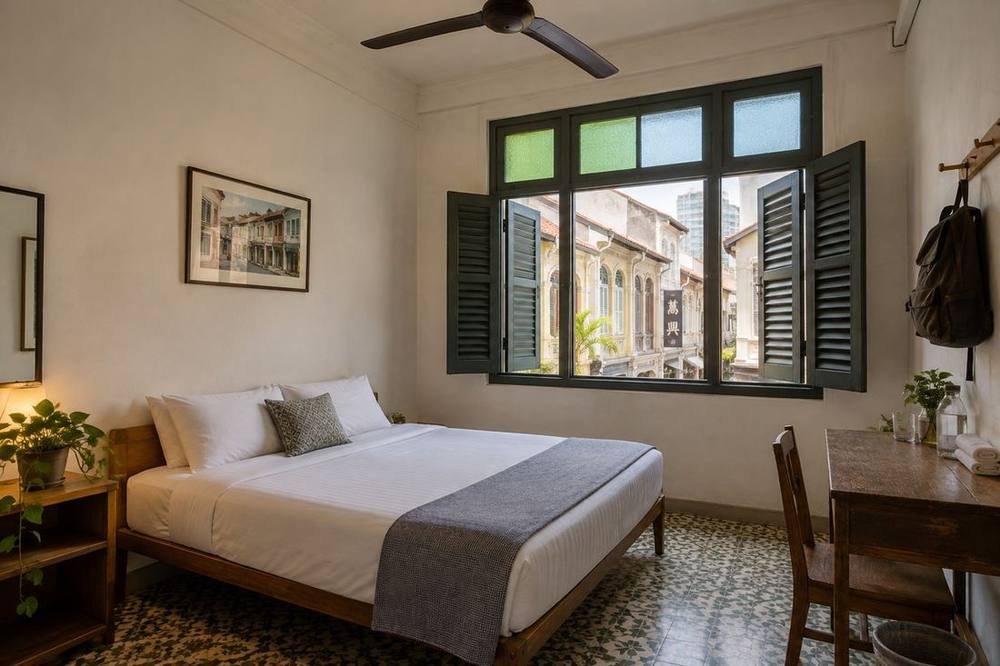
Expect simple and clean rather than stylish. You might have a fan instead of air-conditioning, a thin mattress, and a bathroom you share with the family. In rural homes, the bathroom may have a scoop-and-bucket shower or a squat toilet. If any of this matters to you, ask before you book rather than after you arrive.
Meals
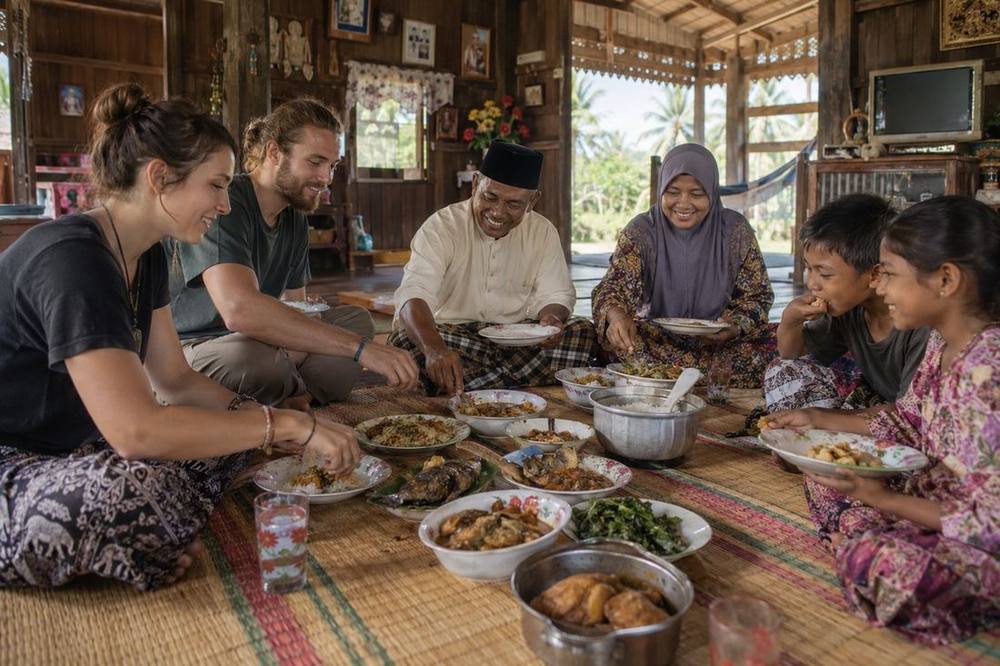
Home cooking is usually the best part. You eat what the family eats, often sitting on a mat or around a shared table. Meals may come at set times that suit the household, not you. In many Southeast Asian homes, the family will keep offering you more food. Eat slowly, and leave a little on your plate when you are full.
Activities
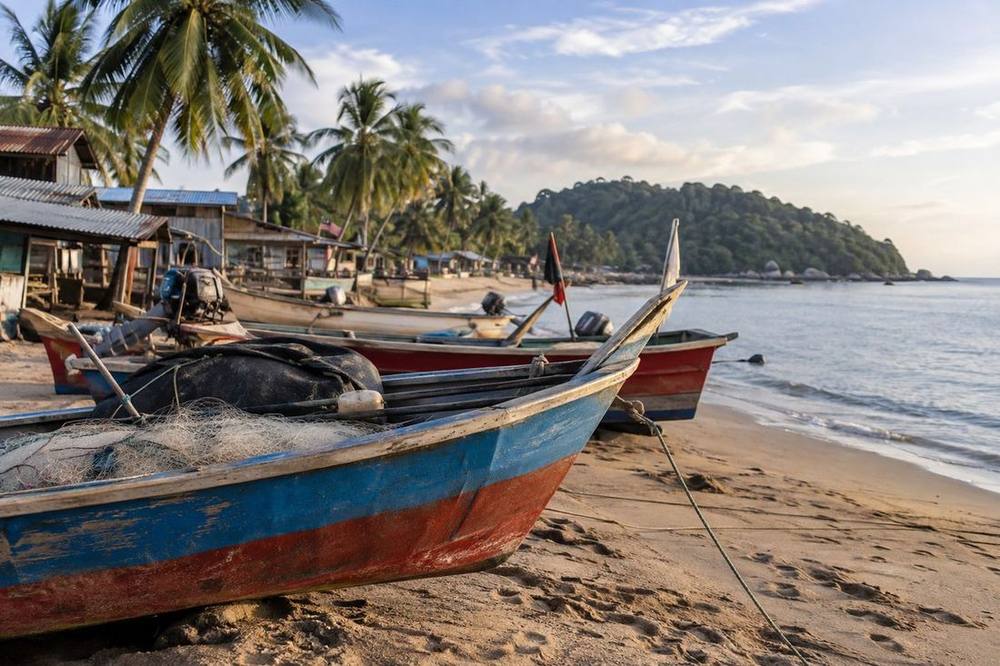
This depends on where you are. In a farming village, you might help harvest fruit, feed animals or plant rice. In a fishing village, you might go out early with the boats. Many hosts also teach cooking, traditional games or crafts.
Pace
Slow. There will be long gaps where nothing happens except tea on the veranda and chatting. That is not a gap in the programme. That is the programme.
What is usually included (and what is not)
This varies a lot, so always confirm. Here is a rough guide to what you can expect.
| Usually included | Sometimes included | Rarely included |
|---|---|---|
| A private room or bed | Lunch and dinner | Air-conditioning |
| Breakfast | Guided activities | Private bathroom |
| Basic bedding | Pickup from the nearest town | Towels and toiletries |
| Drinking water | Laundry | Wi-Fi that actually works |
Packages for village programmes often bundle meals, activities and sometimes transport into one price. A simple room in a family flat may include nothing but the bed and breakfast. Ask exactly what you are paying for, and whether any local tourism tax or service charge is added on top.
How to choose a homestay
A good homestay is less about the room and more about the fit between you and the family. These are the things to look at.
- Who the host is. Read reviews for mentions of the family by name and how they treat guests. Warm, specific reviews (“Aunty taught us to make curry”) are a better sign than “nice place, clean”.
- How remote it is. Many village homestays are far from public transport. Check whether you can get there yourself or need a pickup.
- Language. Your host may speak little English. That is fine and often part of the fun, but it helps to know in advance. A few words of the local language go a long way.
- What kind of stay you want. Do you want a structured programme with activities, or just a quiet room with a family? Pick accordingly.
- Official registration. Where a country has a homestay programme, a registered host has usually been inspected and has a coordinator behind them.
Red flags: no photos of the house, a host who will not say who else lives there, or a price that changes every time you ask.
How to book
Booking a family homestay is not always as easy as tapping “reserve”. Here is what usually works.
- Start with official sources. Tourism boards and tourism ministries often list registered homestay groups and their coordinators.
- Contact the host or coordinator directly. Many hosts prefer a phone call or a messaging app over email. Say how many people, which dates and whether you want meals and activities.
- Ask about transport. If the village is far from a bus route, ask if they can collect you from the nearest town or station, and whether there is a charge.
- Confirm the price in writing. A short message listing the price, nights, meals and activities avoids awkward conversations later.
- Be patient. Many hosts run their homestay alongside farming or other work. Replies can be slow.
Booking apps are fine for city homestays. Just check the listing to see whether the host actually lives there.
Questions to ask before you book
A good habit is to keep this list on your phone and copy it into your first message.
- Is the room in your house, or in a separate building?
- Is the bathroom shared or private? Is there hot water?
- Is there a fan or air-conditioning?
- Which meals are included? Can you cater for allergies or a vegetarian diet?
- What activities are included, and which cost extra?
- Can you pick me up, and from where?
- Are there any house rules I should know about (curfew, dress, alcohol, pets)?
- Is there anything I should bring?
Hosts often answer the last one with “a torch” or “mosquito spray”, which tells you a lot.
Homestay etiquette
A few simple habits make your stay smoother for everyone. Some are specific to Muslim or Asian households, so adjust for where you are.
In the house
- Take off your shoes before going inside. Look for a pile of sandals at the door.
- Ask before you use the kitchen, the washing machine or the fridge.
- Keep your room tidy and your bag zipped. It is still their home.
At meals
- Wait to be invited to sit and start eating, especially if elders are present.
- Use your right hand to give, take and eat, if that is the local custom.
- Try a little of everything. You do not have to finish it.
- Offer to help clear up. Your host may say no, but they will notice you asked.
Dress and behaviour
- Dress modestly, covering shoulders and knees, especially in rural or religious communities.
- Ask before taking photos of people, particularly women, children and elders.
- Check whether alcohol is acceptable in the home before you bring any.
A common slip for first-time guests is pointing with a finger. In Malay homes, people point with the right thumb instead. If you get it wrong, hosts are usually forgiving, and a smile and “maaf” (sorry) is all it takes.
Respecting the culture (not just the rules)
Etiquette is the minimum. Real respect is about attitude.
Remember that you are a guest in someone’s life, not a customer at a theme park. The family is not performing for you. If a planned activity is cancelled because of rain, a wedding or a sick relative, go with it. Many travellers find their best homestay moments come from plans falling apart.
Be curious, and share something back. Show photos of your home, your family or your food. Hosts are often just as interested in you as you are in them.
Bring a small, inexpensive gift if you can, such as a snack from your home country. If you want to give extra money at the end, ask the coordinator how it is usually done.
What to pack for a homestay
You do not need much, but a few things help.
- A small gift for the family
- Modest clothes, including something that covers your knees and shoulders
- Slip-on shoes or sandals that are easy to take off at the door
- A quick-dry towel and basic toiletries
- Insect repellent and a torch or headlamp
- A phrasebook or offline translation app
- Some cash, as many hosts cannot take cards
If your homestay is in a hot, humid area, Tropical Weather Packing List: What to Pack for Heat, Humidity and Monsoon Rain covers the rest.
Many guests also wish they had brought a sarong. It works as a towel, a cover-up, a light blanket and a modest wrap.
My takeaway
Start with one or two nights so you can see if homestays suit you. Pick a host with warm, specific reviews, send your questions before you book, and arrive ready to slow down. If you treat it as joining a family for a few days rather than renting a room, you will get far more out of it.
Sources
- MOTAC, Malaysian Homestay Experience Program (PPHM) downloads: https://www.motac.gov.my/en/category/download/malaysian-homestay-experience-program/
- MOTAC, Garis Panduan Program Pengalaman Homestay Malaysia: https://www.motac.gov.my/wp-content/uploads/2025/11/Garis-Panduan-Pendaftaran-Program-Pengalaman-Homestay-Malaysia-1.pdf (checked Oct 2026)
- Tourism Malaysia, Homestay: https://www.tourism.gov.my/niche/homestay