
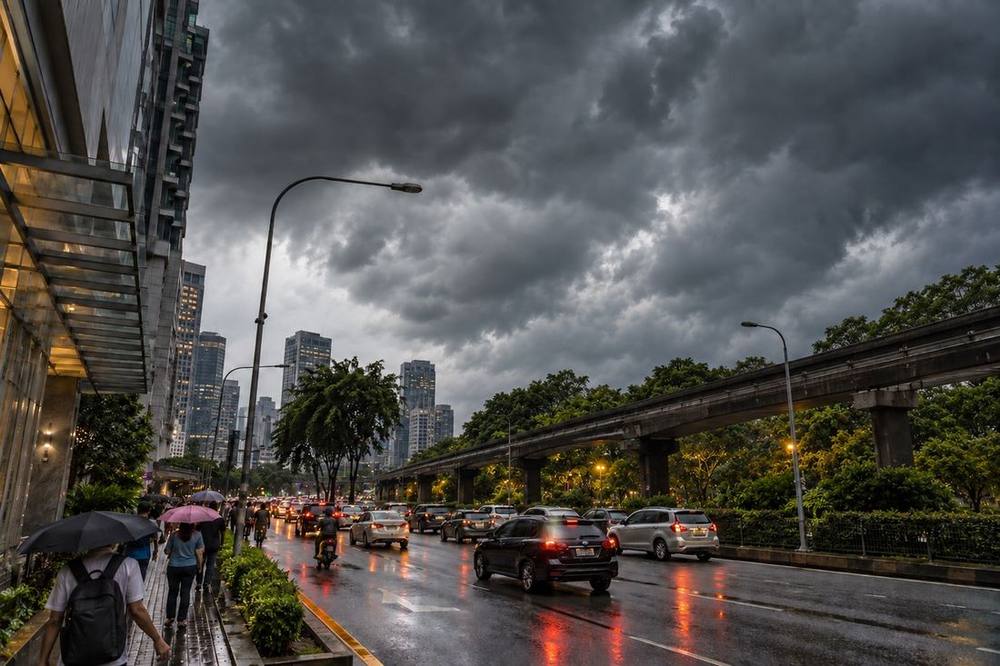
Step out of the airport in Kuala Lumpur and the air feels like a warm, wet towel. By lunch, the sky is clear and the sun is strong. By four o’clock, there may be thunder and rain so heavy you cannot see across the road.
That is normal Malaysian weather, and it shapes everything you pack. This list is built around three things: heat, humidity and rain. There are also notes on monsoon season, because it changes your plans as much as your packing.
A typical scene for new visitors: you set off on a sunny afternoon walk in George Town or KL with no umbrella, and twenty minutes later you are sheltering under a shop’s five-foot way while the street turns into a stream. The storm often passes within an hour, but your shoes and phone may not survive it. Packing for that moment is the heart of this list.
Malaysia’s weather in one minute
Malaysia is warm all year. The Malaysian Meteorological Department (MetMalaysia) says temperatures are fairly uniform through the year, and humidity is high everywhere: in Peninsular Malaysia, mean relative humidity mostly sits somewhere between the low 70s and the high 80s (per cent), depending on place and month. So you do not need different clothes for different months. You need clothes that cope with sweat and rain.
What does change is the rain. According to MetMalaysia:
- Northeast monsoon (November to March): heavy rain, especially on the east coast of Peninsular Malaysia, western Sarawak and eastern Sabah.
- Southwest monsoon (late May to September): relatively drier weather in most of the country.
- Inter-monsoon (around April to May, and October to November): light winds, clear mornings and afternoon thunderstorms. The west coast of the peninsula gets its highest rainfall in these periods.
| Period | Where it rains most | What it means for packing |
|---|---|---|
| November to March (northeast monsoon) | East coast of Peninsular Malaysia, western Sarawak, eastern Sabah | Serious rain gear, dry bags, flexible plans |
| April to May (inter-monsoon) | West coast, afternoon storms | Umbrella in your daypack every day |
| Late May to September (southwest monsoon) | Generally drier | Sun protection matters more |
| October to November (inter-monsoon) | West coast, afternoon storms | Umbrella, quick-dry clothes |
If you are planning the east coast islands, like the Perhentians or Redang, check opening dates carefully. On the Perhentians, for example, Legal Nomads notes that many places close when the monsoon arrives in November. See What to Pack for an Island Trip for more.
Clothes for heat and humidity
The goal is simple: light, loose and fast to dry.
- Breathable tops. Linen, light cotton blends or quick-dry synthetic shirts. Bring 4–5 and wash as you go.
- Loose trousers or long skirts. Cooler than you think, and they cover your legs for temples, mosques and mosquitoes.
- Shorts. Fine for beaches and casual places.
- One light long-sleeved layer. Malls, buses, trains and cinemas often have very strong air conditioning. Overnight buses can feel cold.
- Underwear and socks in quick-dry fabric. Cotton stays damp in humid rooms.
- Swimwear, if you are heading to the coast or islands.
Avoid heavy denim and thick fabrics. They trap heat and can take days to dry in a humid room.
Modest clothes for religious sites
Malaysia is a multicultural country, and many visitors will see mosques, Hindu temples and Chinese temples. Pack at least one outfit that covers your shoulders and knees. A large scarf or sarong is very useful for women and men, because you can wrap it over your shoulders or legs when needed.
Some mosques lend robes and headscarves to visitors.
If you are going to the highlands
Not everywhere is hot. The Cameron Highlands website describes temperatures of around 15°C to 25°C all year, and early mornings can drop to about 10–11°C. If you are visiting Cameron Highlands, Fraser’s Hill or Kundasang in Sabah, pack a warm fleece or jumper and long trousers.
Rain gear that actually works
An umbrella is the most useful thing you can carry in Malaysia. It works for rain and for sun.
- Compact umbrella. Keep it in your daypack every day.
- Light rain jacket or poncho. Better than an umbrella on motorbikes, boats or trails.
- Backpack rain cover or a bin bag liner. Rain often comes sideways in a storm.
- Dry bags or zip-lock bags. For your phone, passport and power bank.
- Quick-dry shoes or sandals. City streets can flood briefly during heavy storms.
In monsoon season on the east coast, add a larger dry bag and plan for the chance that a ferry or bus is delayed.
What you can usually skip: heavy waterproof trousers, thick hiking rain jackets and rubber boots. They are too hot for Malaysian weather, and most travellers stop wearing them after a day. A light poncho and an umbrella cover almost every situation in towns. If you forget something, cheap umbrellas and ponchos are sold in convenience stores and night markets.
Shoes
Two pairs is enough for most trips.
- Comfortable walking shoes or trainers, ideally ones that dry quickly.
- Flip-flops or sandals, for showers, beaches and places where you remove your shoes.
Add trekking shoes only if you plan proper hikes, such as in Taman Negara or on Mount Kinabalu.
Health and sun protection
- Mosquito repellent. The Ministry of Health’s iDengue site recommends using repellent and wearing long sleeves and long pants. It notes Aedes mosquitoes bite most at around 5.30am to 8.00am and 5.30pm to 8.00pm.
- Sunscreen and a hat. The sun is strong close to the equator, even on cloudy days.
- Sunglasses.
- Oral rehydration salts. Useful after a long, sweaty day.
- Small first aid kit, plus any prescription medicine in its original box.
- Refillable water bottle. Drink more than you think you need.
- Small towel or handkerchief. Many Malaysians carry one for sweat.
Electronics
- Type G adaptor. Malaysia uses Type G plugs (three rectangular pins). TNB lists the supply as 230V, 50Hz, though many travel guides still say 240V. Either way, chargers marked 100–240V are fine.
- Power bank. Very useful for maps and e-hailing. If you are flying, CAAM says power banks must go in carry-on baggage, not checked luggage. Malaysia Airlines and AirAsia both allow a maximum of two per passenger and do not allow them to be used or charged during the flight. Check your own airline’s rules.
- Waterproof phone pouch. Good for boats and rainstorms.
Documents and money
- Passport, with a copy saved on your phone and in your email
- Travel insurance details
- A bank card that works overseas, plus a backup card
- Some cash in ringgit (RM). Night markets, small kedai runcit and many rural places prefer cash.
As a rule of thumb, cards usually work in malls, chain hotels, supermarkets and bigger restaurants in cities. Cash is still the safer choice at hawker stalls, night markets, small homestays, boat jetties and rural areas. Many local shops also take QR payments through e-wallets, which may or may not work with your home bank. Carry small notes as well as a card, and do not rely on one method alone.
Quick Malaysia packing list
- 4–5 breathable tops
- 2 pairs of light trousers or long skirts
- 1–2 pairs of shorts
- 1 light long-sleeved layer for air-conditioning
- 1 modest outfit, plus a scarf or sarong
- Swimwear
- Underwear and socks in quick-dry fabric
- Walking shoes and flip-flops
- Compact umbrella and light rain jacket
- Dry bag and zip-lock bags
- Repellent, sunscreen, hat, sunglasses
- Small first aid kit
- Type G adaptor and power bank
- Reusable water bottle

For more ideas on fitting it all in, see Backpack Packing Hacks That Actually Work.
Before you pack, check which monsoon period your dates fall in and where you are going. If it is the east coast between November and March, pack for rain first and sun second.
Sources
- MetMalaysia, “Malaysia’s Climate”: https://www.met.gov.my/en/pendidikan/iklim-malaysia/
- MetMalaysia, “Weather Phenomena” (monsoon periods): https://www.met.gov.my/en/pendidikan/fenomena-cuaca/
- Legal Nomads, “Guide to the Perhentian Islands” (updated February 2026): https://www.legalnomads.com/the-perhentian-islands-malaysias-perfect-beach-destination/
- Cameron Highlands Weather, cameron.com.my: https://www.cameron.com.my/cameron-highlands-weather.html
- iDengue, Ministry of Health Malaysia, “Prevention”: https://idengue.mysa.gov.my/ide_v3/prevention.html
- Electrical Safety First, “Travel adaptor for Malaysia”: https://www.electricalsafetyfirst.org.uk/guidance/advice-for-you/when-travelling/travel-adaptor-for-malaysia/
- Tenaga Nasional Berhad, Electricity Supply Application Handbook 3.1: https://www.tnb.com.my/assets/files/2022_ESAH_3.1.pdf (checked Oct 2026)
- AirAsia Newsroom, “AirAsia Philippines Updates Guidelines on Portable Electronic Devices and Power Banks” (30 Apr 2026): https://newsroom.airasia.com/stories/2026/4/30/airasia-philippines-updates-guidelines-on-portable-electronic-devices-and-power-banks (checked Oct 2026)
- Civil Aviation Authority of Malaysia, Safety Information 03/2025 (power banks): https://www.caam.gov.my/wp-content/uploads/2025/03/SI-03_2025-Safety-Measures-for-the-Carriage-of-Lithium-Ion-Battery-Power-Bank.pdf
- Malaysia Airlines, “Additional Restrictions” (power banks): https://www.malaysiaairlines.com/my/en/travel-info/baggage/additional-restrictions.html