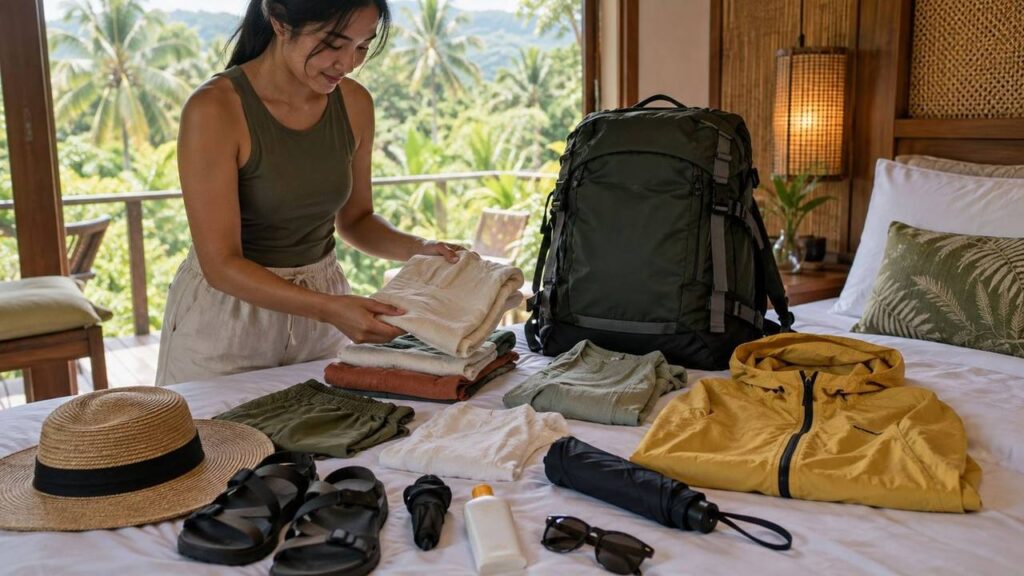
The speedboat from the jetty bounces hard over the waves. Spray comes over the side, and everyone grabs their bags. Twenty minutes later you jump off into knee-deep water on a white beach, and your backpack had better be dry.
Island trips are some of the best trips you can take in Malaysia, but they need a slightly different packing list. Islands like the Perhentians, Redang and Tioman have fewer shops, often no banks, and you reach them by boat. What you forget on the mainland, you may have to live without.
Most boats leave from mainland jetties such as Kuala Besut, Merang or Mersing, and the last town before the jetty is your final chance to shop properly. Treat it like a supply stop: cash, snacks, sunscreen and any medicine you need.
Before you pack: check the season
The east coast islands are strongly affected by the northeast monsoon. MetMalaysia says this monsoon runs from November to March and brings heavy rain, especially to the east coast of Peninsular Malaysia. On many east coast islands, some chalets, cafes and boat services close or cut back during the wettest months, while others stay open all year.
Opening and closing dates change from year to year, so if your trip is near the edges of the season, check with your accommodation and boat operator before you go.
Islands on the west coast, like Langkawi and Pangkor, follow a different rain pattern. See How Monsoon Seasons Affect Your Trip (and How to Plan Around Them) for how the rainy seasons work.
Money: bring cash
This is the most important item on the list.
Many small islands have no ATMs, or only one that may be empty or broken when you need it, so you need to bring cash. Card payment may work at some bigger resorts, but small chalets, cafes and boat taxis often want cash.
Many islands sit inside a marine park, and visitors pay a conservation fee to enter. Foreign visitors usually pay more than locals, and fees change over time, so ask about the current rate when you buy your ferry ticket. It is often collected at the jetty or by the boat operator, and small counters may only take cash, so keep some set aside for it.
A simple rule: take out enough cash on the mainland for your whole island stay, plus a buffer, and keep it in two different places in your bag. Ask for smaller notes too. Island cafes and boat taxis often struggle to give change for big notes, especially early in the morning or late in the season. If you run short, some resorts let you pay by card or offer cash back, but the charges can be high, so treat that as a last resort.
To work out how much to bring, list what you will pay for in cash each day:
- Your chalet or room, if it does not take cards or online payment
- Three meals and drinks
- Boat taxis between beaches
- Snorkel trips and gear rental
- The marine park fee and the return boat, if not already paid
Add these up for your whole stay, then add a buffer for bad weather days, when you might stay an extra night because boats are not running.
Keeping things dry
Boats, waves and rain mean water will get into everything unless you plan for it.
- Dry bag (10–20 litres). For your phone, passport, cash and power bank during the boat ride.
- Waterproof phone pouch. Lets you take photos on the boat or in shallow water.
- Bin bag or rain cover for your backpack. Speedboats are wet, and bags sometimes sit on an open deck.
- Zip-lock bags. For wet swimwear on the way back, and for keeping sand out of things.
Some islands have no proper jetty at every beach, so you may need to step off into shallow water. Pack so that you can carry everything with your hands free.

Clothes for island days
You will spend most of the day in swimwear and very light clothes.
- 2 swimsuits, so one can dry while you wear the other
- A rash guard or long-sleeved swim top. Protects your back while snorkelling, when you float face-down for an hour
- Light shorts and T-shirts
- A sarong. Beach cover-up, towel, picnic mat and sun shade in one
- One modest outfit for walking through villages. Some island communities are conservative, so cover up away from the beach
- A light long-sleeved layer for the evening and for mosquitoes
Leave behind jeans, heavy jackets and fancy shoes. Sand gets into everything.
Sun and sea protection
The sun on the water is stronger than in the city. Pack more sun protection than you think you need.
- Sunscreen, and plenty of it. Many travellers choose mineral sunscreen marketed as reef-friendly. Better still, cover up with a rash guard so you need less
- A wide-brimmed hat that will not blow off on the boat
- Sunglasses with a strap
- After-sun or aloe gel
- Lip balm with SPF
- Insect repellent. Sandflies and mosquitoes can be busy around sunset
Snorkel and beach gear
You can usually rent snorkel sets on the islands, but quality varies. If you plan to snorkel every day, bringing your own mask is worth it.
| Item | Bring your own? | Why |
|---|---|---|
| Snorkel mask | Yes, if you snorkel a lot | A good fit stops leaks and fogging |
| Snorkel tube | Optional | Easy to rent, but your own is more hygienic |
| Fins | Usually rent | Bulky to carry |
| Water shoes | Yes | Rocks, sharp shells and hot sand |
| Microfibre towel | Yes | Light and dries fast |
| Life jacket | Rent or use the operator’s | Operators should provide one on boats |
Remember that marine parks have strict rules. Marine Parks of Malaysia lists rules such as not touching or standing on coral, not chasing or harassing marine life, and not collecting any part of marine organisms, alive or dead, including coral pieces and shells. Fishing is not allowed within marine park boundaries. So leave room in your bag for memories, not shells.
A common mistake for first-time snorkellers is to stand up on coral to fix a leaking mask. Practise putting on and clearing your mask in shallow, sandy water first. If you need a rest, float on your back or hold on to the boat, not the reef.
Practical extras
- Power bank and cables. Some smaller chalets run power only at certain hours, so charge everything whenever you can.
- Headlamp or torch. Paths between beaches can be dark at night.
- Motion sickness tablets, if boats make you queasy. Take them before you board.
- Small first aid kit, with plasters for coral or rock cuts and antiseptic cream.
- Refillable water bottle. Ask your chalet if they offer refills, to cut down on plastic.
- Snacks from the mainland. Island shops have less choice and higher prices.
- A reusable bag for rubbish. Help keep the beaches clean.
If you are flying to an island like Langkawi or to a coastal airport before your ferry, remember power bank rules. CAAM says power banks must go in carry-on baggage, not in checked luggage, and airlines add their own limits, so check yours before you fly.
Island packing checklist
- Cash for the whole stay, plus marine park fee
- Dry bag and waterproof phone pouch
- 2 swimsuits and a rash guard
- Sarong and microfibre towel
- Light clothes, plus one modest outfit
- Sunscreen, hat, sunglasses, after-sun
- Insect repellent
- Snorkel mask and water shoes
- Headlamp and power bank
- Motion sickness tablets and a small first aid kit
- Snacks and a refillable bottle

For the small everyday items worth taking on every trip, see Backpacker Essentials: 8 Small Things Worth Packing.
Before you leave the mainland, do one last check at the jetty: cash, dry bag, sunscreen. With those three, you can sort out almost anything else on the island.
Sources
- MetMalaysia, “Weather Phenomena” (monsoon periods): https://www.met.gov.my/en/pendidikan/fenomena-cuaca/
- Marine Parks of Malaysia, “Marine Park Rules”: https://marineparksofmalaysia.com/visit/marine-park-rules/
- Civil Aviation Authority of Malaysia, Safety Information 03/2025 (power banks): https://www.caam.gov.my/wp-content/uploads/2025/03/SI-03_2025-Safety-Measures-for-the-Carriage-of-Lithium-Ion-Battery-Power-Bank.pdf