
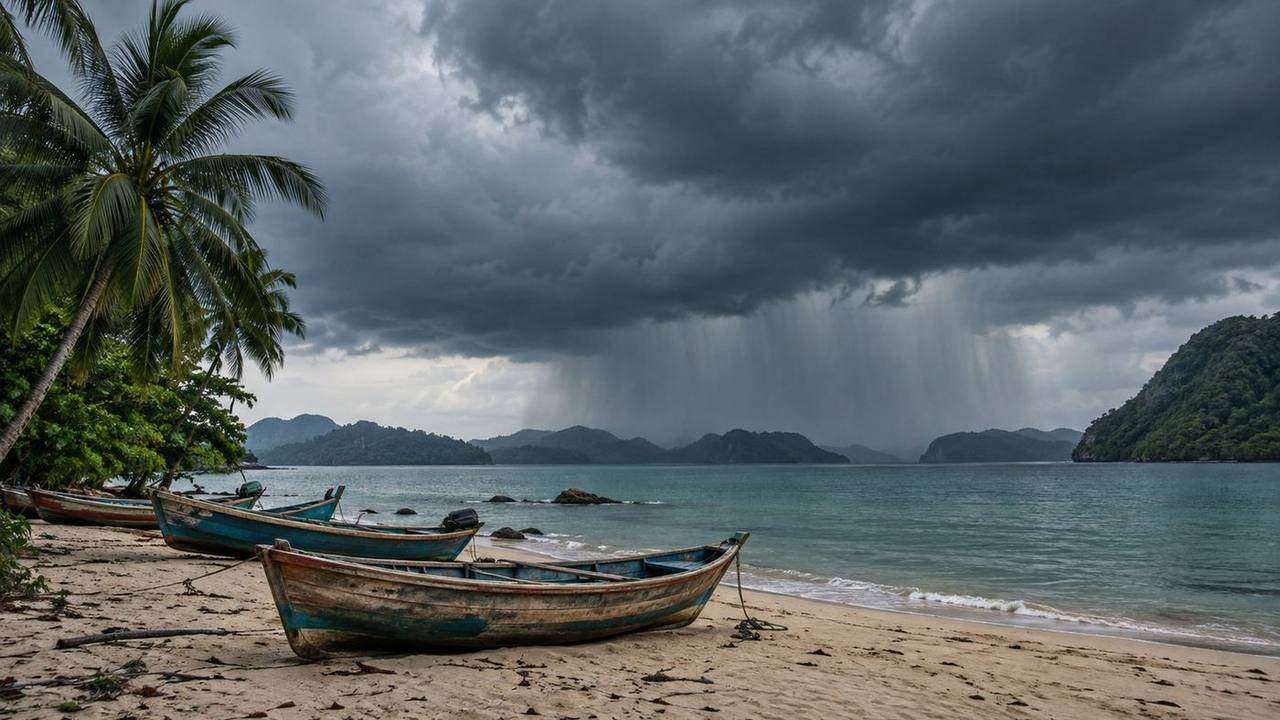
It is December, and you want a few days on an island off Malaysia’s east coast next week. The honest answer is probably not, but the other coast would love to see you.
That is the thing about monsoons. They do not just mean “it might rain”. They can close islands, cancel boats and shut whole resorts for months, while somewhere a few hours away the sun is shining. Once you understand how they work, you can plan around them instead of being caught out.
A typical mistake looks like this. A traveller books a cheap flight to the east coast in December, then finds the island boats are not running and half the resorts are shut. Checking the season before booking would have sent them west instead, with no wasted days.
What is a monsoon?
A monsoon is a seasonal change in the direction of the wind. For part of the year, the wind blows mainly from one direction. Later, it switches round and blows from the other. Because the wind picks up moisture as it crosses the sea, the coasts it blows onto get much more rain during that season.
So “monsoon season” is not one season for a whole country. It is a wet season for the coasts facing the wind, and often a drier season for the coasts sheltered from it. In tropical countries, temperatures barely change through the year. What changes is rain, wind and the sea.
A real example: Malaysia’s two monsoons
Malaysia is a good example, because its coasts run on almost opposite calendars. The Malaysian Meteorological Department (MetMalaysia) describes two main monsoons, with shorter changeover periods between them.
- Northeast Monsoon (roughly November to March). This brings heavy rain to the east coast states of Peninsular Malaysia, as well as western Sarawak and the east of Sabah. It is also when the biggest floods tend to happen on the east coast.
- Southwest Monsoon (roughly late May to September). This is a relatively drier time for most of the country.
- Inter-monsoon periods (between the two). Winds are light and change direction. MetMalaysia says thunderstorms are more common in these months, mostly in the afternoon, especially on the west coast of the peninsula.
In practice, that means islands facing the South China Sea are usually best in the middle of the year, and the west coast often has its driest weather around the start of the year. Other countries in the region have their own patterns, so always look up the place you are going.

What actually changes during the monsoon
Sea conditions
This is the big one for island trips. Strong, steady winds build big waves and rough seas. Small speedboats and ferries may run fewer trips, run late or stop completely. Snorkelling and diving visibility drops as the water gets churned up and rivers wash silt into the sea.
Even near the start or end of the season, a calm morning can turn into a choppy afternoon crossing.
Island and resort closures
On coasts that take the full force of the monsoon, many island resorts, dive shops and small cafés simply close for the season. Some islands have only a basic boat service for locals and almost nothing open for visitors. This is not bad luck. It is planned, and operators usually announce their dates.
Rain patterns
Monsoon rain is not always all-day rain. On some coasts, it means heavy, steady rain for days at a time. Elsewhere, especially in the changeover months, it often means a sunny morning and a big thunderstorm in the afternoon or evening. Knowing which pattern to expect helps you plan your days, for example doing outdoor activities early.
On land
Heavy rain can flood roads, delay buses and close jungle trails or national park routes. River levels rise, which can be good for river trips and bad for anything that crosses a river on foot. Leeches love the wet season, too.
A rainy day does not have to be a wasted day. Many travellers find a simple routine works well:
- Go out early, while the morning is often clear.
- Plan indoor stops for the afternoon, such as museums, markets, cafés or a cooking class.
- Keep a dry change of clothes in your day bag.
- Check the forecast in the evening and adjust the next day’s plan.
The upside of travelling in the wet season
The monsoon is not all bad. On the sheltered side of a country, or inland, the “wet season” can be perfectly good travel time.
- Fewer crowds. Popular places can be much quieter.
- Lower prices. Accommodation often drops its rates outside peak season.
- Green landscapes. Rice fields, waterfalls and rainforests look their best.
- Cooler days. Rain often takes the edge off the heat.
The trick is to choose places that are not badly affected, and to keep your plans flexible.
How to check forecasts and warnings
Do not rely on a weather app’s little cloud icon alone. For trips that depend on the sea, use proper sources.
- The national weather service. Most countries have one, and it is the best source for official warnings. In Malaysia that is MetMalaysia, which issues weather and sea warnings on its website and app.
- Marine or sea-state forecasts. These show wave height and wind speed, which matter far more for boat trips than the chance of rain.
- Rainfall maps and radar. Useful for seeing whether a storm is passing or settling in.
- Look a few days ahead, then check again. Forecasts are more reliable closer to the day.
A simple rule: if official warnings mention strong winds or rough seas for the area you are sailing in, expect delays or cancellations.
How to check operator notices
The weather service tells you what the sea will do. The operators tell you what they will do about it.
- Ferry and boat operators often post schedule changes and cancellations on their social media pages or messaging channels rather than their websites. Follow them before you travel.
- Resorts and guesthouses on islands usually announce their opening and closing dates for the season. If a place is not taking bookings for your dates, that is a clue.
- Dive shops are often the most honest about conditions, because bad visibility is bad for business.
- Ask your accommodation. Your host is usually the first to know whether tomorrow’s boat is running.
If your boat is cancelled, stay calm and ask three questions. When is the next likely departure? Can your ticket be moved or refunded? Can your accommodation keep your room an extra night? Getting answers early gives you the best choice of beds and boats once the sea calms down.
Booking flexibly
When you travel near or during the monsoon, flexibility is worth paying a little extra for.
- Choose refundable or free-cancellation rooms where you can, especially on islands.
- Avoid tight connections. Do not book a flight home the morning after a ferry back from an island. Leave at least one spare day.
- Book the boat and the room together when a resort offers a package. If the boat does not run, it is easier to sort out.
- Have a plan B. If the island is off, where will you go instead? Often the answer is the other coast, or somewhere inland.
- Check your travel insurance to see what it covers for weather delays and cancellations.
The shoulder months, at the start and end of a monsoon, are the biggest gamble. They can be lovely, quiet and cheaper, or rough and wet. Go if you are flexible, but do not build your whole trip around one boat.
Packing for monsoon travel
A few extra items make wet-season travel far more pleasant.
- A light, packable rain jacket (umbrellas are useless in wind)
- Quick-dry clothes, so things actually dry overnight
- Sandals or shoes that can get soaked
- A dry bag for your phone, passport and electronics, especially on boats
- A rain cover for your backpack
- Insect repellent, as mosquitoes thrive after rain
- Motion sickness tablets for rough crossings
- A few books or downloaded films for rainy afternoons
For more detail, see Rain covers and dry bags: keeping gear dry in monsoon season and What to Pack for an Island Trip.

My takeaway
Pick your travel month first, then find out which coasts and islands are in season for it. Check the national weather service and the boat operator a few days before you go, book things you can cancel, and leave a spare day around any sea crossing. Do that, and the monsoon becomes something you plan around, not something that ruins your trip.
Sources
- Malaysian Meteorological Department (MetMalaysia), Weather Phenomena: https://www.met.gov.my/en/pendidikan/fenomena-cuaca/
- Malaysian Meteorological Department (MetMalaysia), Malaysia’s Climate: https://www.met.gov.my/en/pendidikan/iklim-malaysia/