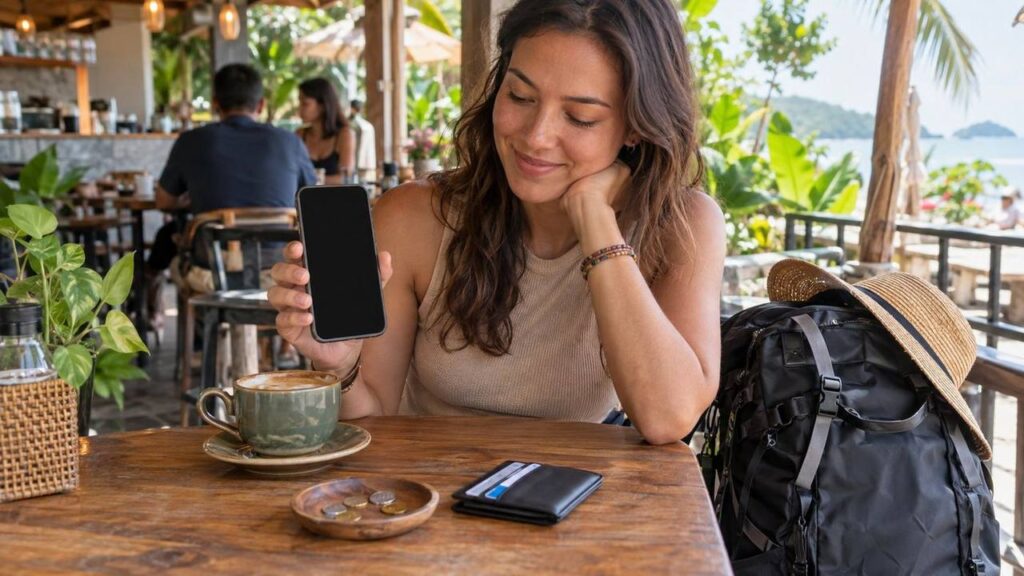
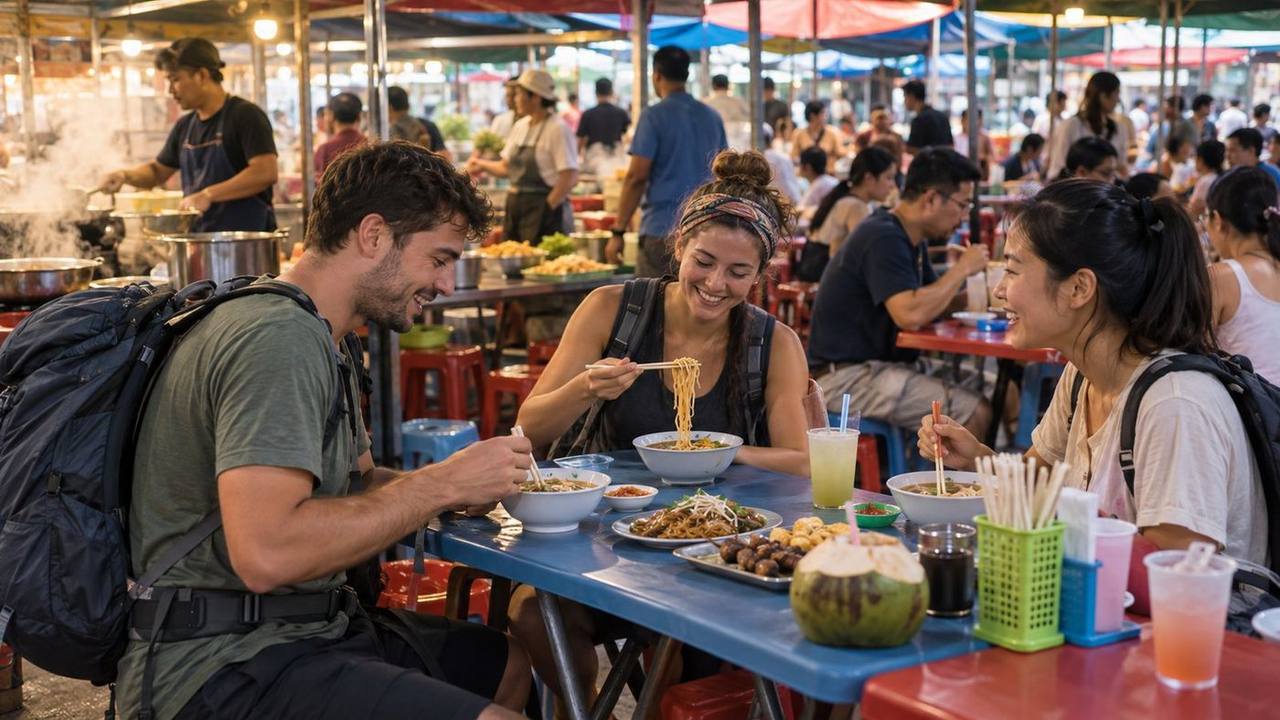
It is 11pm, you have just stepped off a long bus ride, and you are starving. Then you see the plastic chairs, the bright lights and a man flipping roti canai on a hot griddle. That is the moment most backpackers fall in love with Malaysian food.
Eating at hawker stalls, mamak restaurants and kopitiam is the cheapest way to eat here. It is also the tastiest. This guide covers what to order, how each place works, how to read halal signs, and a few habits that will make you look less like a lost tourist.
What does a hawker meal cost?
Prices change by town, by stall and by year, so I will not quote numbers that will be out of date by the time you read this. As a rule, a plate at a hawker stall or mamak costs a fraction of a café or mall meal, and drinks are cheap too.
The easiest way to know a fair price is to look at the menu board, ask before you order anything without a price, and watch what locals pay. Rice dishes where you choose your own toppings are the ones most likely to surprise you, so ask as you go.
A quick worked example: if a plate of mee goreng at a mamak costs about the same as a canned drink at a convenience shop, you are paying a fair local price. If the same dish on a tourist street costs two or three times more, walk a few streets away and look again.
Where to eat: the main types
Hawker stalls and food courts
A hawker centre is a group of small stalls under one roof, each selling one or two dishes. You walk around, order from different stalls, and sit anywhere. In Penang, people often call these places food courts or open-air hawker centres.
How it usually works:
- Find a table first.
- Note your table number (often painted on the table).
- Order at the stall and tell them your table number.
- Pay when the food arrives, or when you order if the stall asks.
Drinks are often sold by a separate person who comes to your table. You pay them on the spot.
Mamak restaurants
Mamak restaurants are run by Tamil Muslims, a community whose roots go back to South India and Sri Lanka (Wikipedia). Being Muslim-run, they do not serve pork, but they do serve beef.
Typical mamak food includes:
- Roti canai: flaky flatbread with dhal or curry
- Murtabak: stuffed flatbread with meat, egg and onion
- Thosai: a thin rice and lentil crepe
- Nasi lemak, mee goreng and nasi goreng
- Teh tarik: sweet “pulled” milk tea
- Milo: often iced, and very popular
Many mamak places stay open very late, and some never close, which makes them perfect after a night bus.

Kopitiam
A kopitiam is a traditional coffee shop, usually run by Chinese families. The word mixes “kopi” (coffee) with “tiam”, from the Hokkien word for shop (Wikipedia).
Classic kopitiam breakfast is kaya toast with soft-boiled eggs and a strong local coffee. Many kopitiam also host stalls selling noodles, chicken rice or nasi lemak.
In malls, you will also see modern “kopitiam-style” chains. Wikipedia notes these are often halal-compliant, but they usually cost more than an old-school coffee shop.
Night markets (pasar malam)
Night markets pop up on a set night each week in a car park or street. You can snack your way through for very little.
One of KL’s best known is the Taman Connaught night market in Cheras, which Culture Trip describes as one of the longest in the city. Like most night markets, it runs on one set evening a week, so ask your hostel which night before you go.
A few night market habits help a lot:
- Arrive early in the evening, before the biggest crowds.
- Walk the whole market once before you buy anything.
- Bring small notes and a bag for takeaway snacks.
- Share snacks with friends so you can try more stalls.
Jalan Alor
Jalan Alor in Bukit Bintang is KL’s best-known food street. It comes alive in the evening. You will find satay, grilled chicken wings, seafood and noodles. Trusted Malaysia notes that many small vendors prefer cash.
It is fun, but it is also a tourist street. You will often find the same dishes cheaper in a neighbourhood hawker centre.
Dishes every backpacker should try
Here is my starter list. These are the dishes you will see everywhere, so they are easy to find on a budget.
Rice dishes
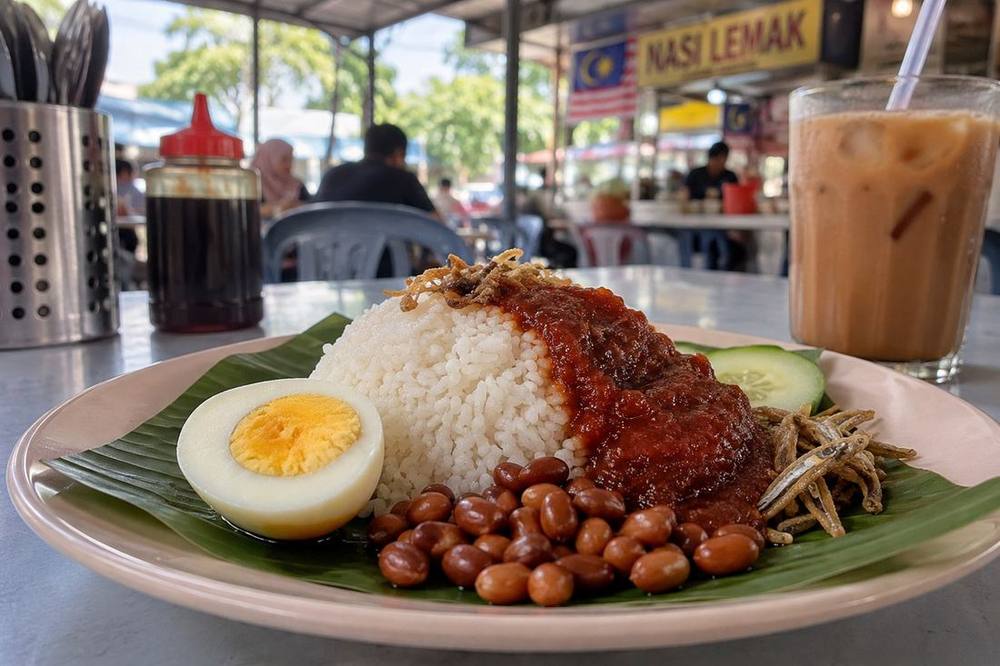
- Nasi lemak: coconut rice with sambal, peanuts, anchovies, cucumber and egg. Often wrapped in banana leaf or paper for takeaway.
- Nasi campur: “mixed rice”. You pick dishes from a tray and pay by what you take. Ask the price before you add the fish.
- Chicken rice: steamed or roasted chicken with fragrant rice and chilli sauce.
- Nasi kandar: rice with lots of curries poured on top, famous in Penang.
Noodles
- Char kway teow: flat rice noodles fried with prawns, egg and bean sprouts.
- Laksa: there are many kinds. Penang’s asam laksa is sour and fishy, while curry laksa is rich and coconut-based.
- Mee goreng mamak: spicy fried yellow noodles from a mamak stall.
- Wantan mee: thin egg noodles with dumplings and char siew (often pork, so check if that matters to you).
Snacks and sweets
- Satay: grilled meat skewers with peanut sauce.
- Cendol: shaved ice with green pandan jelly, coconut milk and palm sugar.
- Rojak: fruit and vegetables in a thick, sweet and spicy sauce.
- Kuih: small colourful cakes, often sold in the morning.
Not keen on spicy food? Ask for “tak mau pedas” (not spicy), or ask for the sambal on the side so you can add as much as you like.
How to order drinks like a local
Ordering coffee and tea can be confusing at first. Here are the basics you will hear at most kopitiam and mamak places:
- Kopi: coffee with sweetened condensed milk
- Kopi O: black coffee with sugar
- Kopi C: coffee with evaporated milk and sugar
- Teh: tea with condensed milk
- Kosong: no sugar
- Ais (or peng in Chinese shops): iced
Plain water is air kosong. Asking for it is a good way to save money.
Halal labels and what they mean
Malaysia is a Muslim-majority country, so you will see a lot of halal food. But not all signs mean the same thing.
- The official halal logo is issued by JAKIM, the government’s Islamic development department. This is the certified label.
- “Pork free” or “No pork” signs do not mean halal. In 2016 JAKIM warned that these signs, used by places without certification, can confuse Muslim diners (The Star). The food may still contain alcohol, or be prepared in a non-halal way.
- Mamak restaurants are Muslim-run and do not serve pork (Wikipedia), but this is not the same as formal certification.
If you eat halal, look for the JAKIM logo or eat at Malay or mamak places. If you do not eat pork for other reasons, ask at Chinese stalls, since many dishes use pork or lard.
Hawker etiquette
These are general habits that help everything go smoothly:
- Find a seat first, then order. Remember your table number.
- Share tables at busy times. It is normal to ask “boleh duduk?” (can I sit?).
- Carry small cash. Many stalls take e-wallets now, but not all.
- Use your right hand for passing money or food, especially at Malay and Indian places.
- Do not leave a big mess, but you do not need to clear your own tray at most stalls.
- Tipping is not expected at hawker stalls.
- Look for queues of locals. A long line at lunchtime is the best review.
- During Ramadan, be discreet about eating in public during daylight hours, out of respect. Ramadan bazaars in the evening are a great place to try Malay food. Ramadan follows the Islamic lunar calendar and moves earlier each year, so check the dates for your trip.
Saving money on food
- Eat your big meal at lunch, when office worker sets are cheap.
- Look for set meals or “economy rice” counters, which are usually the cheapest filling option.
- Drink teh tarik or plain water, not canned drinks.
- Pay attention at nasi campur. Seafood and large meat pieces push the price up.
- Avoid ordering from picture menus aimed at tourists on busy streets.
For carrying the right mix of cash and e-wallets, see Staying Connected and Handling Money When You Travel. To keep the rest of your trip cheap too, read How to Travel Cheaply by Bus, Train and Ferry.
My takeaway
On your first day, try three places: a mamak for roti canai and teh tarik, a kopitiam for kaya toast, and a night market for snacks. After that, you will know what you like, how to order, and roughly what a fair price looks like in that town.
Sources
- Wikipedia, Mamak stall (checked Oct 2026): https://en.wikipedia.org/wiki/Mamak_stall
- Wikipedia, Kopi tiam (checked Oct 2026): https://en.wikipedia.org/wiki/Kopi_tiam
- Culture Trip, A Traveller’s Guide to Taman Connaught Market (checked Oct 2026): https://theculturetrip.com/asia/malaysia/articles/a-travellers-guide-to-taman-connaught-market-kuala-lumpur
- Trusted Malaysia, Guide to Jalan Alor Food Street (checked Oct 2026): https://www.trustedmalaysia.com/guide-to-jalan-alor-food-street/
- The Star, Jakim: ‘Pork Free’, ‘No Pork’ do not mean food is halal (Feb 2016): https://www.thestar.com.my/news/nation/2016/02/16/jakim-pork-free-no-pork-do-not-mean-food-is-halal/