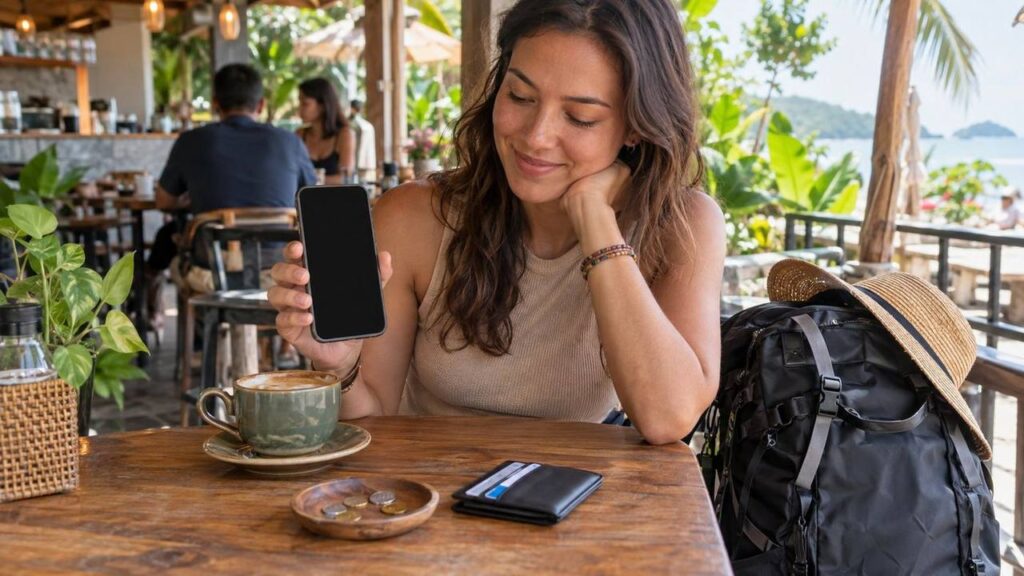
It is 11pm at a bus terminal. You have a ticket in one hand, a backpack on your shoulders and no idea which of the twenty coaches is yours. The bus leaves in ten minutes. Somewhere, a man is shouting the name of your destination.
That is cheap overland travel. It is not always smooth, but it saves a lot of money compared with flying, and it shows you the country in a way an airport never will.
These habits will help you travel cheaply by bus, train and ferry without losing your mind (or your bag).
Bus, train or ferry: which is cheapest?
There is no single answer, because it depends on the route and the country. But some patterns hold almost everywhere.
| Bus | Train | Ferry | |
|---|---|---|---|
| Usually cheapest for | Long trips between towns | Busy routes between big cities | Island hops (often the only way) |
| Comfort | Varies a lot by operator | Usually the most comfortable | Depends on boat and weather |
| Reaches small towns | Yes, almost everywhere | Only along the line | Only to ports and jetties |
| Overnight option | Common | On some routes | On some long routes |
| Booking ahead | Helpful on busy days | Often essential | Helpful in peak season |
In much of Southeast Asia, buses go to more places and cost less. Trains are often more comfortable and more reliable on time. Ferries are less about price and more about whether you can get there at all.
Booking ahead vs walking up
This is the question most budget travellers ask first.
When to book ahead
- Trains with assigned seats. Many trains sell out, especially on popular intercity routes. Once seats are gone, you cannot just stand.
- Public holidays and festivals. Around big holidays, half the country is going home at the same time. Book as early as you can.
- Weekends and school holidays. Friday evening and Sunday afternoon are busy almost everywhere.
- Overnight buses. The best seats go first.
- Small ferries in peak season. Island boats can fill up when the weather is good and everyone wants to go.
When walking up works
- Short, frequent routes, like a bus between two nearby towns.
- Midweek travel outside holidays.
- When you are not sure of your plans and the route has plenty of departures.
Walking up gives you flexibility. The risk is a sold-out bus and a night in a town you had not planned to see.
A simple rule: if missing this trip would wreck the next few days, book it. If there is another bus in an hour, do not bother.
Using booking apps and websites
Most countries now have apps or websites that sell bus, train and ferry tickets. Some are run by the operators, and some are third-party sites that compare many operators at once.
A few general tips:
- Compare at least two sites. The same bus can show different prices, and some add booking fees at the last step.
- Check the operator’s own site too. It is sometimes cheaper and has the most accurate timetable.
- Read recent reviews of the operator, not just the booking site. Comfort and safety vary a lot between bus companies.
- Save your ticket offline. Screenshot it or download the PDF. Terminals often have weak signal.
- Check the departure point carefully. Big cities can have several bus terminals, and some operators leave from their own office.
A common problem is a ticket that does not show up in the app, or a bus that leaves from a different spot than you expected. To avoid this, check your booking email the day before, note the operator’s phone number, and arrive at least 30 minutes early so you have time to find the right counter.
Overnight buses and trains
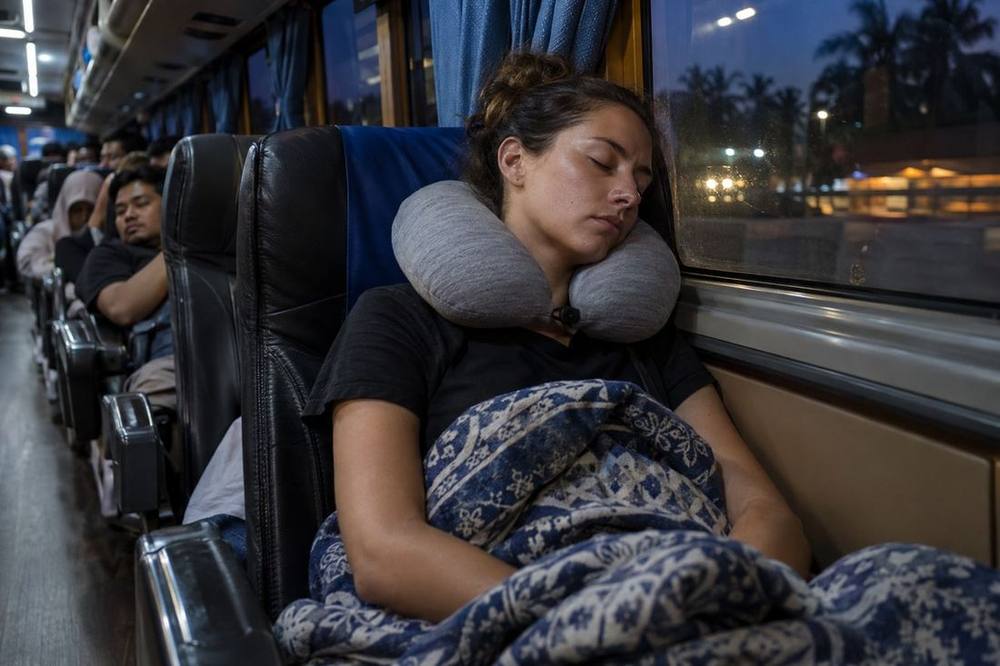
Overnight travel is one of the oldest backpacker money-savers. You cover a long distance and skip a night of accommodation at the same time.
It is not for everyone, though. Here is how to make it bearable.
Pros
- You save a night’s accommodation.
- You do not lose a whole day of sightseeing to travel.
Cons
- Sleep is often poor, so the next day can be a write-off.
- You may arrive at 4am in a town where nothing is open.
- It can be harder to keep an eye on your belongings.
Tips for sleeping on the move
- Bring a neck pillow, eye mask and earplugs.
- Wear layers. Air-conditioning on buses and trains is often freezing, so a jacket or sarong is a must.
- Use the toilet before you board. Many buses have no toilet, and rest stops can be far apart.
- Plan where you will go when you arrive early. A 24-hour café or a hostel that allows early check-in is gold.
If you can, choose a sleeper train over an overnight bus. A bed in a carriage beats a reclining seat on a winding road.
Choosing a good seat
Seats matter more than you think on a long trip.
On buses: – Middle rows are usually the smoothest. The back bounces and is often near the toilet or engine. – If you get travel sick, sit near the front and look out at the road. – Many long-distance coaches have wider “2+1” layouts, with a single seat on one side. A single seat means no stranger falling asleep on your shoulder. – Pick the side away from the afternoon sun if it is a day trip.
On trains: – Seats facing the direction of travel are easier on the stomach. – Window seats are great for views but mean climbing over people for the toilet. – On sleeper trains, lower bunks are easier to get into and often have more space, while upper bunks feel more private.
On ferries: – Sit in the middle of the boat and as low as you can for the least motion. – Outdoor seats give fresh air but can mean salt spray and sunburn.
Comfort on long journeys
A few small things make a long day much easier. Keep them in a small daypack that stays with you, not in the luggage hold.
- Water and snacks, in case there are no stops
- A jacket or sarong for cold air-conditioning
- Tissues and hand sanitiser (toilets at stops do not always have paper or soap)
- A power bank and charging cable
- Downloaded music, podcasts or films
- Motion sickness tablets if you need them
For more ideas, see Backpacking Comfort Hacks for Heat, Long Bus Rides and Hostels.
Staying safe
Most bus, train and ferry trips are completely uneventful. A bit of care keeps them that way.
- Keep valuables on you. Passport, phone, cards and cash go in a small bag you hold or wear, not in the overhead rack or the luggage hold.
- Use licensed operators. Very cheap, unlicensed buses or boats sometimes cut corners on safety.
- Look for life jackets on boats. If there are none, or the boat looks overloaded, think twice.
- Share your plans. Send someone your route and expected arrival time.
- Arrive in daylight if you can, especially in a new town.
- Be wary of “helpers” at terminals who grab your bag or insist your bus has been cancelled. Check with the official counter.
If you ever feel uneasy, act early. Move to a seat near the driver or other passengers, tell the crew, or get off at a busy stop. You do not need to explain yourself to anyone.
Luggage
Cheap transport and big luggage do not mix well. A smaller bag makes everything easier: overhead racks, crowded aisles, small boats and jetty steps.
- On buses, big bags usually go underneath. Keep a daypack with your valuables and essentials with you.
- Watch your bag go into the hold, and keep an eye out at stops so nobody takes it by mistake.
- On ferries, bags may be stacked on deck or in an open area. A rain cover or dry bag protects against spray and rain.
- Some ferries and small boats have strict luggage limits or charge extra for big bags, so check before you go.
This is one reason a backpack usually beats a suitcase for overland trips. Backpack vs Suitcase: Which Is Better for Your Trip? explains why.
Ferries and sea-sickness
Ferries can be the most beautiful part of a trip, or the worst hour of your life. Sea conditions make all the difference.
Before you go
- Check the weather and sea forecast. Rough seas often mean cancellations, especially during monsoon months.
- Eat something light. An empty stomach and a full stomach are both bad ideas.
- If you are prone to sickness, take a motion sickness tablet before you board, as directed on the pack. They work much better taken early.
On board
- Sit in the middle of the boat and low down, where there is least movement.
- Look at the horizon, not your phone.
- Get fresh air if you can.
- Sip water and nibble plain crackers or ginger sweets.
Speedboats to islands can be very bumpy, even in good weather. Hold on, keep your bag secure and protect your phone from spray.

Paying: cards vs cash
Payment habits are changing fast. In many cities, you can now tap a bank card or phone at train gates and ferry terminals. In rural areas, small bus counters and island boats may still be cash only.
- Carry some small notes. Local buses often need exact change.
- Get the local transit card if a city uses one. It is often cheaper than single tickets and saves queuing.
- Use a card with low foreign fees for online bookings.
- Withdraw cash in town before heading to small islands or villages, where ATMs can be rare.
Staying Connected and Handling Money When You Travel goes into this in more detail.
My takeaway
Book the trips you cannot afford to miss, stay flexible on the rest, and keep a small bag with your valuables, water and a warm layer on you at all times. Do that, and cheap overland travel becomes one of the best parts of the trip rather than something to survive.
Sources
No external facts used.