The first night of a trip often tells you what you forgot. You step into a shared hostel shower barefoot, or you find a public toilet with no paper, or your phone dies on a long bus ride with nothing else to do. None of these things ruin a trip, but they make it a little harder.
Most packing lists talk about clothes. This one is about the small things that sit in the side pockets of your backpack. They weigh very little, cost very little and save you trouble almost every day you are on the road in Malaysia.
A common slip for first-time backpackers is to pack plenty of clothes but forget the tiny items, then spend the first evening hunting for a shop that sells plasters or a plug adaptor. This list helps you avoid that.
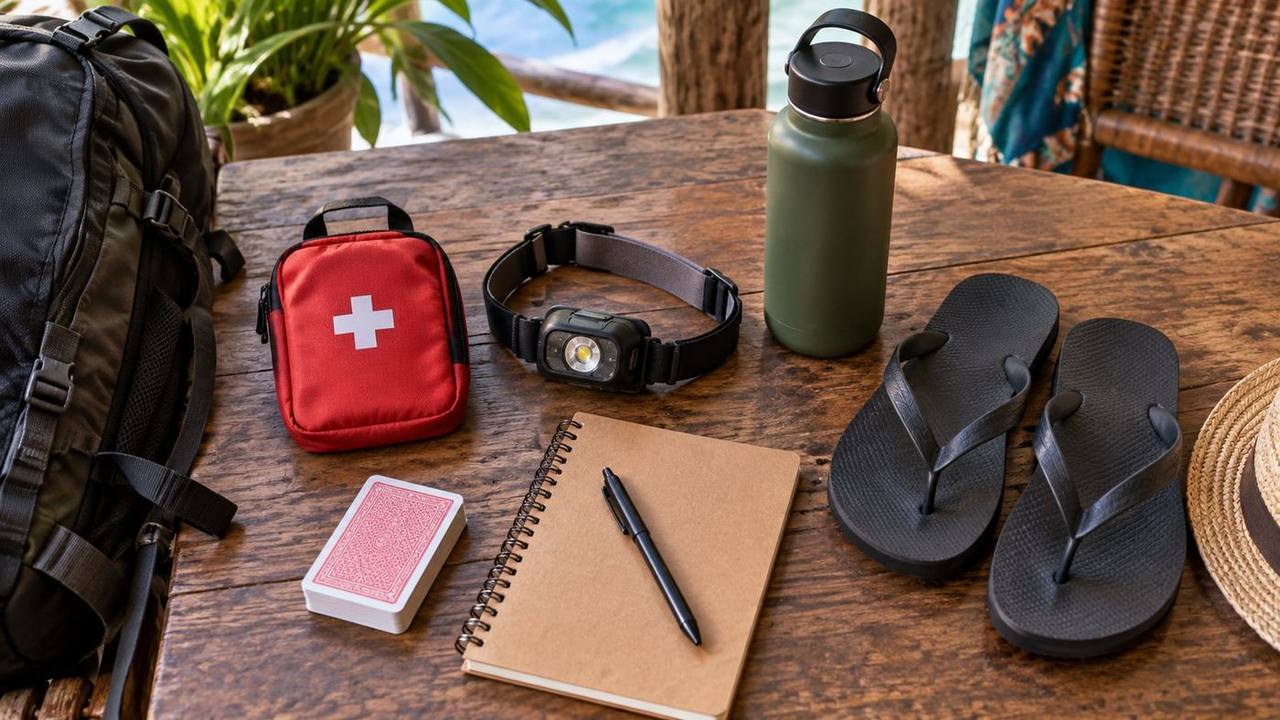
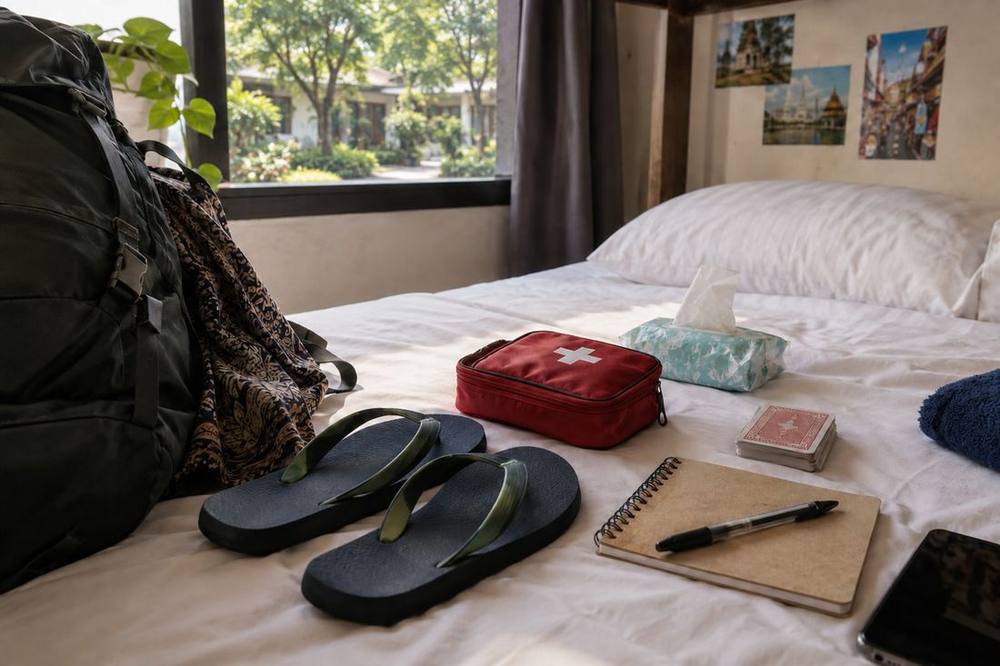
1. A pair of flip-flops (selipar)
If you could only pack one pair of shoes for Malaysia, it might be flip-flops. Here we call them selipar, and you will see them everywhere, from mamak stalls to mosques to beach jetties.
They are useful for so many things:
- Hostel and homestay showers. Shared bathroom floors are often wet and not always clean. Flip-flops keep your feet off them.
- Wet bathroom floors in general. Many Malaysian bathrooms have a hose spray next to the toilet, so the floor is often damp.
- Places where you take shoes off. Homes, many guesthouses, temples and mosques ask you to remove your shoes. Slip-on footwear makes this quick.
- Backup shoes. If your trainers get soaked in an afternoon storm or a sole comes loose, you still have something to wear.
Choose a pair with a good grip. Cheap, smooth ones can be slippery on wet tiles. If you forget yours, you can find a basic pair in almost any small shop or pasar malam (night market).

2. A small first aid kit
You do not need a hospital in your bag. You need a small pouch with the things you would want at 11pm when the pharmacy is closed. In big towns, pharmacies like Watsons and Guardian are easy to find, but on an island or in a kampung you may be far from one.
A good basic kit includes:
- Plasters in a few sizes, plus a couple of blister plasters
- Antiseptic cream or wipes
- Painkillers you already know work for you
- Oral rehydration salts, for heat or an upset stomach
- Diarrhoea tablets
- Antihistamine and a small tube of bite cream
- Mosquito repellent
- Any prescription medicine, in its original box, with a copy of the prescription
Mosquito repellent is not optional in Malaysia. The Ministry of Health’s iDengue site advises using repellent and wearing long sleeves and long pants, and it says Aedes mosquitoes bite most around 5.30am to 8.00am and 5.30pm to 8.00pm. A good habit is to put on repellent before breakfast and again before dinner.
Check your kit before every trip. Many travellers find that the plasters are used up or the painkillers have expired since the last journey. Keep everything in a small zip pouch so it stays dry in humid weather.
3. The three Ts: tissues, towelettes and toilet paper
This is the least glamorous item on the list and maybe the most useful.
- Tissues. A small pack is handy at hawker stalls, where napkins are not always given. You will also see people “chope” (reserve) tables with a tissue packet, which is a local habit worth knowing.
- Towelettes (wet wipes). Great after eating with your hands, after a sweaty walk or when there is no sink nearby.
- Toilet paper. Many public toilets in Malaysia use a water hose instead of paper. Some provide paper, many do not. A small roll or a pack of tissues in your daypack saves stress.
Some public toilets also charge a small fee, so keep a few coins or small notes ready.
4. Spare bags
A few empty bags are always worth packing. They take up almost no space and solve many small problems.
- Zip-lock bags. For your phone and passport on boat trips, for snacks, and for liquids at the airport.
- A small dry bag. Very useful in monsoon season or on any ferry ride where spray comes over the side.
- A laundry bag. Keeps sweaty or wet clothes away from clean ones. In Malaysian heat, clothes get damp quickly.
- A foldable shopping bag. Handy for market shopping and for carrying snacks onto a long bus ride.
One zip-lock bag also makes a good “document pouch” for your passport, bank cards and a printed copy of your bookings.
5. A pack of cards (or something offline to do)
Long journeys are part of backpacking in Malaysia. Overnight buses, slow trains and waiting at a ferry jetty for the tide all take time. Your phone battery will not last forever.
A pack of cards is light and it is also a good way to meet people. Ask other travellers in a hostel common room if they want to play, and you usually have new friends within ten minutes. A paperback book or a small travel game works too.
Simple games travel best. Choose ones like Uno or a standard deck that people from many countries already know, so you spend less time explaining rules.
6. A notebook and a pen
Yes, everything is on your phone. But a pen and notebook still earn their place.
- Forms. Hotels, homestays and some tour operators may ask you to fill in a form by hand.
- Directions and addresses. Write down your homestay address in case your phone dies. A taxi or e-hailing driver can read it from the page.
- Prices and spending. Writing down what you spend each day helps you stay on budget.
- A travel journal. Small details fade fast. Writing a few lines each night keeps them.
7. A universal adaptor and a small power bank
The original version of this list did not include these, but today they are hard to travel without.
Malaysia uses the Type G plug, the same three rectangular pins as the UK. Tenaga Nasional (TNB) lists the supply as 230V, 50Hz, although many travel guides still say 240V. If you come from a country with a different plug, bring an adaptor. If your devices are not rated for 220–240V, check before you plug them in.
A power bank keeps your phone alive for maps, e-hailing and bank apps. Just note that rules for flying with them have become stricter. Malaysia Airlines says each passenger may carry a maximum of two power banks, only in cabin baggage, and they cannot be used or charged during the flight. Check your own airline’s rules before you fly.
8. A light, quick-dry towel
Many hostels charge to rent a towel, or do not have one at all. A thin microfibre towel dries much faster than a cotton one in humid air and takes up a fraction of the space. Use it for the beach, the shower and as a seat cover on a damp bench.
Quick checklist
| Item | Why it matters in Malaysia | Easy to buy here if you forget? |
|---|---|---|
| Flip-flops | Wet bathrooms, shoes-off places, beaches | Yes, in most small shops and night markets |
| First aid kit | Pharmacies can be far away on islands | Yes in towns (Watsons, Guardian) |
| Tissues, wipes, toilet paper | Many toilets use a hose, not paper | Yes, at any 7-Eleven or kedai runcit |
| Spare and dry bags | Rain, ferries, wet laundry | Zip-locks yes, good dry bags harder |
| Cards or a book | Long bus rides, no signal in some areas | Yes |
| Notebook and pen | Forms, addresses, budgeting | Yes |
| Adaptor and power bank | Type G plugs, maps and e-hailing | Yes, in malls and phone shops |
| Quick-dry towel | Hostels may not supply one | Sometimes, in outdoor or sports shops |
How to pack these small things
Split them between two places. The first aid kit, adaptor and towel go in the main bag. Tissues, wipes, one zip-lock bag, the pen and a few coins live in your daypack, because those are the things you need while you are out.
For more ideas on making everything fit, read Backpack Packing Hacks That Actually Work. If you are coming in the rainy months, also see Tropical Weather Packing List: What to Pack for Heat, Humidity and Monsoon Rain.
Before your next trip, open your bag and check for these eight things. If one is missing, add it now, while it is still easy.
Sources
- iDengue, Ministry of Health Malaysia, “Prevention”: https://idengue.mysa.gov.my/ide_v3/prevention.html
- Electrical Safety First, “Travel adaptor for Malaysia”: https://www.electricalsafetyfirst.org.uk/guidance/advice-for-you/when-travelling/travel-adaptor-for-malaysia/
- Tenaga Nasional Berhad, Electricity Supply Application Handbook 3.1 (supply voltage 400/230V, 50Hz): https://www.tnb.com.my/assets/files/2022_ESAH_3.1.pdf (checked Oct 2026)
- Malaysia Airlines, “Additional Restrictions” (power banks): https://www.malaysiaairlines.com/my/en/travel-info/baggage/additional-restrictions.html