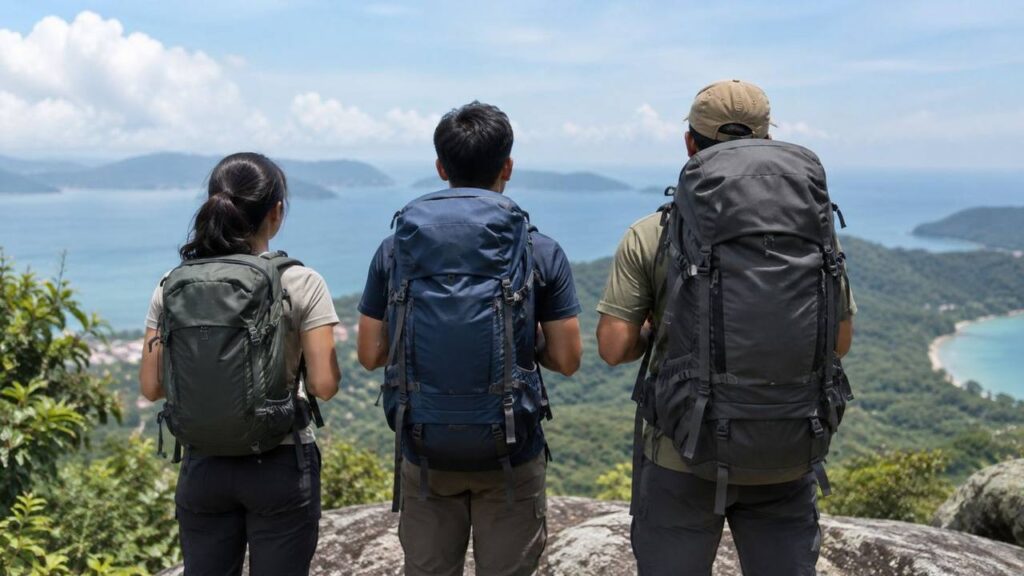
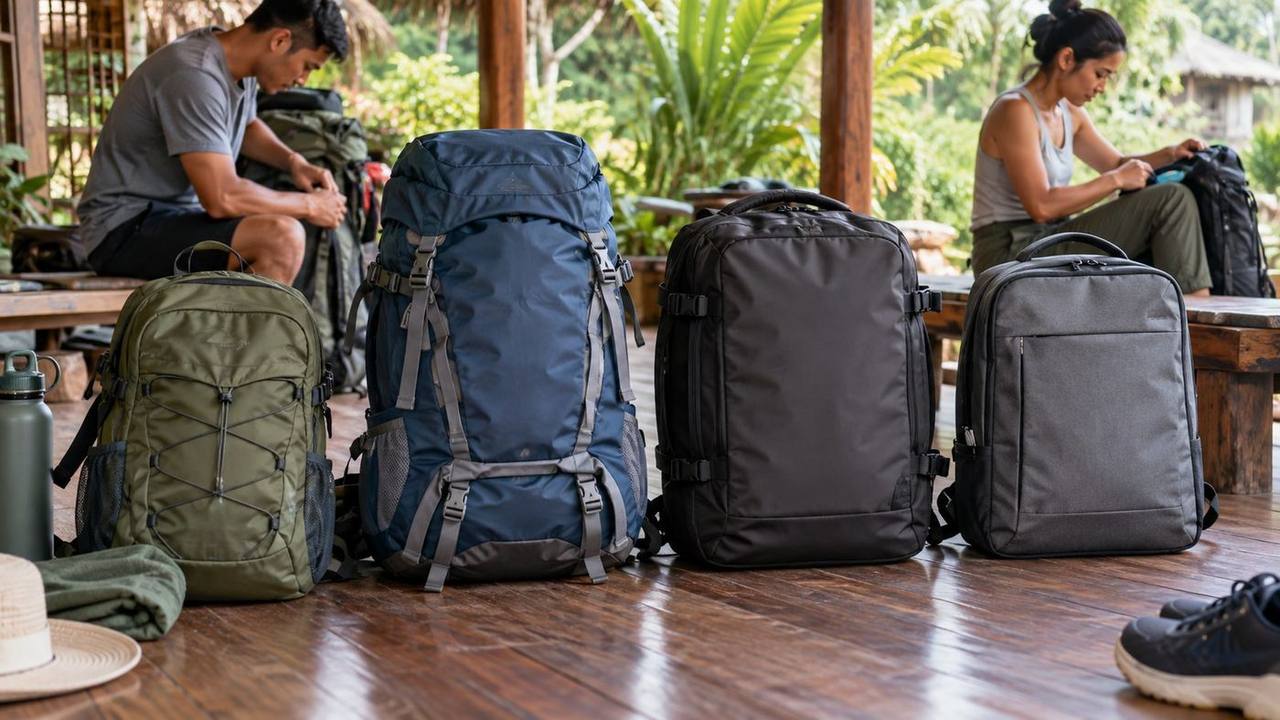
Walk into any outdoor shop in a Kuala Lumpur mall and you will see a whole wall of backpacks. Some are tiny and sporty, some are huge with straps everywhere, and some look like a suitcase with shoulder straps. They all say “backpack” on the label, but they are made for very different jobs.
Using the wrong type is a common mistake. A big hiking pack is clumsy in a hostel dorm, and a school bag will not carry a week of clothes up a jungle trail comfortably. Here is a simple guide to the main types of backpacks and when each one makes sense.
Quick comparison
| Type | Typical size | Best for |
|---|---|---|
| Daypack | 15–35L | City days, short hikes, day trips |
| Travel pack | 30–45L | Hostels, budget flights, multi-stop trips |
| Hiking or trekking pack | 40–80L | Multi-day treks, camping |
| Hydration pack | 10L or less to around 20L | Running, cycling, short hot hikes |
| Cycling pack | Small to mid | Bike rides and commuting |
| Climbing pack | Small to mid | Rock climbing and scrambles |
| Dry bag backpack | Varies | Boats, rivers, beach days |
| Wheeled backpack | Varies | Mostly smooth surfaces |
Sizes are rough. The REI ranges I mention below are a good starting point.
Daypacks
A daypack is the small bag you carry for a day out. It holds water, a rain jacket, sunscreen, snacks, your phone and maybe a camera.
REI, the US outdoor retailer, says daypacks usually range from 5 to 40 litres. It calls 21–35 litres the “sweet spot” for most hiking and travel daypacks. Packs of 11–20 litres suit hiking, biking and travel days with lighter loads, and 10 litres or less suits running, road biking and hikes under two hours.
In Malaysia, a daypack is the bag most travellers use most. It comes out for walking around Georgetown, a morning at a waterfall, or a day trip from your homestay. Look for side pockets for water bottles, because you will drink a lot in this heat.
A packable daypack is a thin version that folds into its own pocket. It weighs almost nothing and is great to tuck inside your main bag for day trips.

Travel packs
A travel pack is built for moving between places, not for hiking. Most open like a suitcase (this is called clamshell or panel loading), so you can see everything inside without pulling it all out.
Common features include:
- A padded laptop sleeve
- Lockable or hidden zips
- Stowable straps, so nothing gets caught on airport belts
- A size that fits airline cabin limits
REI notes that a 35-litre travel pack will meet most airline limits. For budget flights in Malaysia, check the exact numbers. AirAsia lists a main cabin bag limit of 56cm x 36cm x 23cm, with a combined cabin weight of 7kg (AirAsia newsroom advisory; same limits on klia2.info, checked October 2026).
If you hop between hostels and homestays every few days, this is probably the bag for you. I cover how to pick one in How to Choose a Backpack for Travel: A Practical Guide.
Hiking and trekking packs
These are the big packs with a proper frame, padded hip belt and lots of straps. They are made to carry heavy loads for many hours.
REI suggests 30–50 litres for a weekend of 1–3 nights, 50–80 litres for 3–5 nights, and 70 litres or more for longer trips. Most have an internal frame hidden in the back panel. REI says 80 percent or more of the weight should sit on your hips, which is why the hip belt is so important on these bags.
Common features:
- Ventilated back panels (very welcome in our humidity)
- Trekking pole holders
- A sleeve for a water reservoir
- A top lid pocket and a separate bottom compartment
- A rain cover
You would want one of these for a multi-day trek where you carry your own gear, or a camping trip in Taman Negara or Endau-Rompin.
For a normal hostel trip, a big hiking pack can be overkill. It is heavy when empty and awkward on buses.
Not sure if you need one? If your trek includes guesthouse or lodge stays and a guide supplies the cooking gear, a 30–40L pack is often enough. Go bigger only when you must carry a tent, sleeping bag and food yourself.
Hydration packs
A hydration pack is a slim pack with a built-in water bladder and a drinking tube. You sip as you move without stopping to dig out a bottle.
They are popular with trail runners and cyclists. In Malaysia’s heat, they are also handy for short, steep hikes where you sweat a lot. Many daypacks and hiking packs also have a sleeve for a reservoir, so you can add one later.
Wash and dry the bladder well after each use. In hot, humid weather it can start to smell quickly.
Cycling packs
Cycling packs are small and slim so they do not catch the wind or hit your helmet. Many have:
- A ventilated back panel
- Tool and pump pockets
- A helmet holder
- A loop for a rear light
- A hydration sleeve
If you plan a cycling day around Langkawi or Putrajaya, a small cycling pack or hydration pack is better than a big bag, which will make you sweat and throw off your balance.
Climbing packs
Climbing packs are narrow and close-fitting so you can move your arms freely. They are simple and tough, with few pockets to snag on rock.
Look for:
- Gear loops for climbing equipment
- A rope strap or holder
- A helmet clip
- Wide access to the main compartment
You only need one if you go climbing. For a general scramble or summit hike, a good daypack does the job.
Dry bag backpacks
A dry bag backpack is made from waterproof material with a roll-top closure. You roll the top down a few times and clip it shut.
It is great for:
- Small boat rides to islands
- River trips and kayaking
- Snorkelling day trips
- Monsoon season, when rain is heavy
MetMalaysia says the Northeast Monsoon runs from November to March and brings heavy rain, especially to the east coast of Peninsular Malaysia, west Sarawak and east Sabah. If you travel then, a dry bag (or dry bags inside a normal pack) is a smart idea.
They are not very comfortable for long walks, as most have thin straps and no frame.
A simple kit for an island-hopping or snorkelling day fits in a 10–20L dry bag backpack:
- Phone in a waterproof pouch with a lanyard
- Reef-friendly sunscreen, a hat and sunglasses
- A microfibre towel and a dry T-shirt for the ride back
- Water and a snack
- Small notes for park fees or a drink on the beach
Wheeled backpacks
A wheeled backpack has wheels and a pull-out handle, plus shoulder straps that you can unzip and use when the ground gets rough. It sounds like the best of both worlds.
The downside is weight. The wheels and frame add a lot, which matters with a 7kg cabin limit. The straps are often thin, so it is not great to carry for long. It works best if most of your route is airports, malls and hotels. I compare these choices in Backpack vs Suitcase: Which Is Better for Your Trip?.
What about school and laptop backpacks?
Plenty of people start travelling with the bag they used for school or work, and that is fine for a short trip. These bags are usually simple, with a laptop sleeve and a few pockets.
What they lack is a hip belt, a proper frame and good ventilation. They are fine for a weekend in Melaka with a few clothes. For a longer trip with more weight, they get uncomfortable fast.
Anti-theft backpacks
Anti-theft bags have hidden zips, cut-resistant fabric or locking zip pulls. They are mainly designed for cities and crowds. They can give you peace of mind in busy places like Petaling Street or a pasar malam, but good habits (keeping valuables in a front or hidden pocket) matter just as much.
How to choose between them
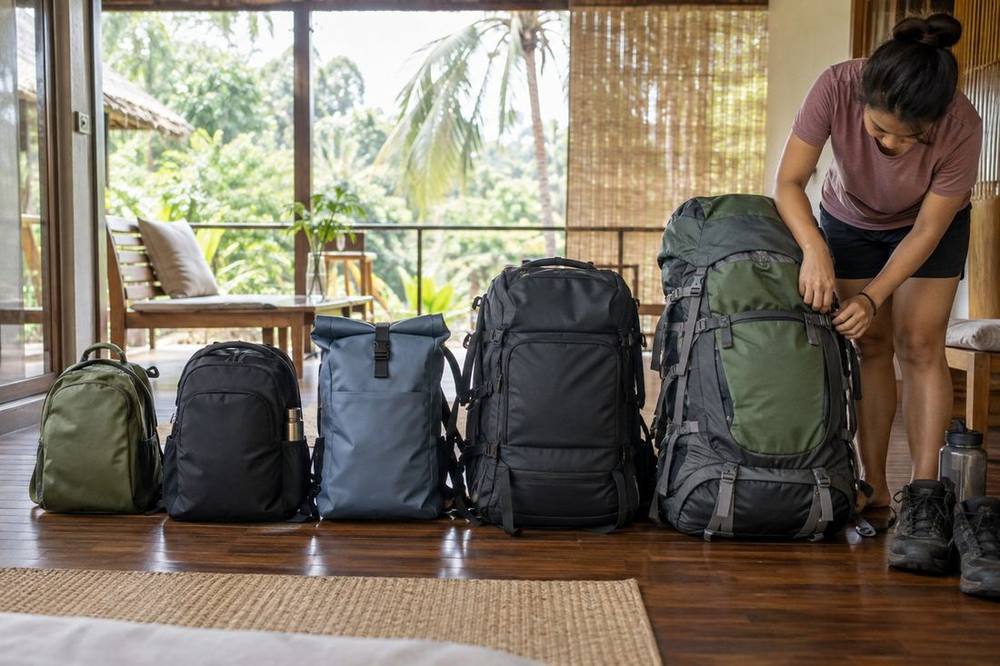
Ask yourself one question: what will you be doing most of the time?
- Mostly walking around towns and day trips: a daypack.
- Moving between hostels and flying budget: a travel pack plus a packable daypack.
- Camping or multi-day treks: a hiking pack.
- Boats, rivers and rainy season: add a dry bag.
Many backpackers end up with two bags: one main pack and one small daypack. That setup covers most trips around Malaysia. To decide on the size of your main bag, read 30L vs 40L vs 60L: Which Backpack Size Do You Need?, then try a few on with some weight inside before you buy.
Sources
- REI, “Daypacks: How to Choose”: https://www.rei.com/learn/expert-advice/daypack.html
- REI, “How to Choose a Backpack: Sizing & Fit Guide”: https://www.rei.com/learn/expert-advice/backpack.html
- REI, “The 7 Best Travel Backpacks of 2026”: https://www.rei.com/learn/expert-advice/best-travel-backpacks.html
- AirAsia Newsroom, “AirAsia Travel Advisory: Cabin Baggage Allowance Update”: https://newsroom.airasia.com/news/2020/7/6/airasia-travel-advisory-cabin-baggage-allowance-update
- klia2.info, “Baggage Information for AirAsia Flights”: https://www.klia2.info/airlines/airasia-baggage-info/
- MetMalaysia, “Weather Phenomena”: https://www.met.gov.my/en/pendidikan/fenomena-cuaca/