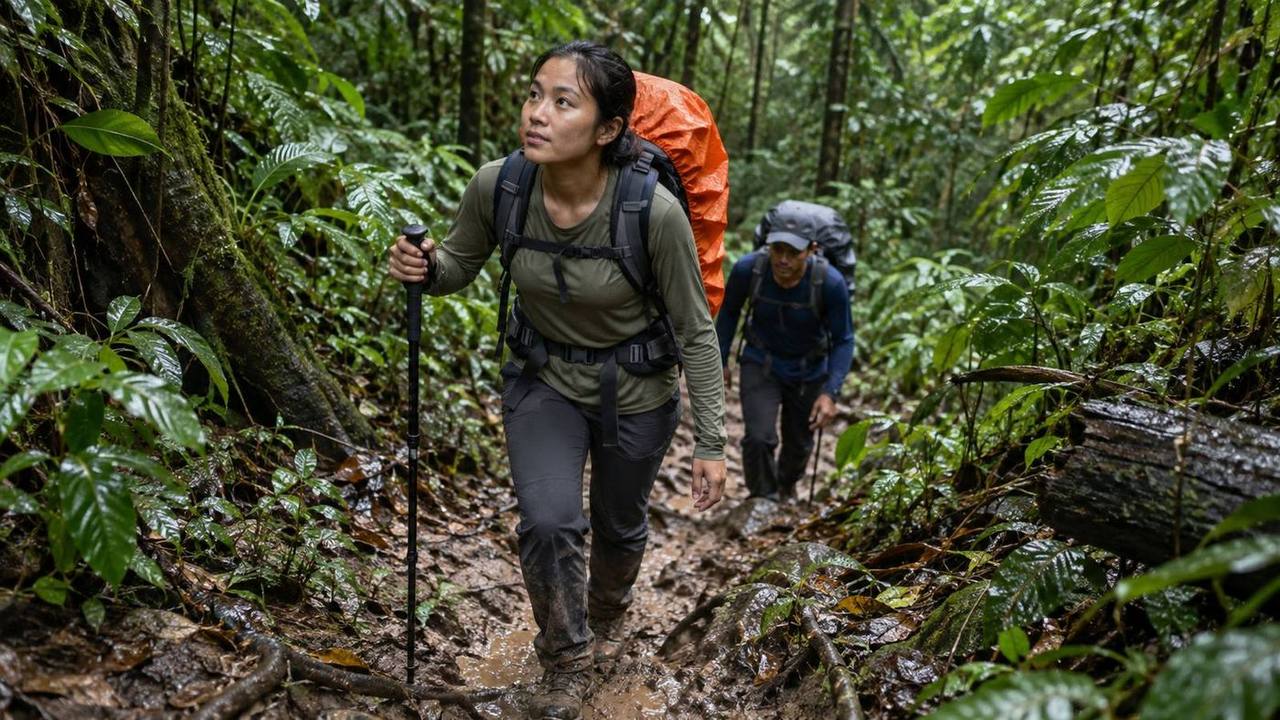
Ten minutes into the trail, your shirt is soaked through with sweat. The air is thick, the ground is slippery, and someone ahead of you shouts that there is a leech on their ankle. Welcome to the Malaysian rainforest. It is one of the most amazing places you can walk, but it punishes bad packing.
This list is built for treks in Taman Negara in Pahang and the national parks of Sabah and Sarawak, such as Mulu. It focuses on three problems: heat and humidity, daily rain, and leeches.
Many first-time jungle trekkers are surprised by how slow the walking is. Roots, mud and steep steps mean a few kilometres can take hours, so you sweat more and drink more than on a city walk of the same length. Pack for the time on the trail, not just the distance.
Know the park rules before you pack
Some of what you need depends on park rules, so check these first.
Taman Negara (Pahang)
- Permits: Visitors need an entry permit, and there is a separate permit if you bring a camera. Both are small fees, but rates can change, so check when you arrive. Tahan Outdoor says permits are issued at the Wildlife Department office at Kuala Tembeling or at the park entrance.
- Guides: You can walk the shorter marked trails near the entrance on your own. Tahan Outdoor says multi-day treks and Gunung Tahan need a licensed guide, and that this is enforced.
- Season: Tahan Outdoor recommends visiting from March to September and avoiding November to January, when trails flood and Gunung Tahan is closed.
Closure dates for longer trails can shift with the weather each year, so check with the park office or your guide before you book.
Mulu National Park (Sarawak)
- Mulu’s official site says the park has qualified guides that can be booked at Park HQ.
- Drones and video filming need special permits from the Forest Department, even for private use.
- The park says it is remote, with no ATMs, banks or chemists, so bring cash and your own first aid kit.
Ask at Park HQ which walks and caves need a guide before you plan your days.
Weather
MetMalaysia says the Northeast Monsoon (November to March) brings heavy rain to the east coast states, including Pahang, and to Sarawak and Sabah. Mulu’s own site warns visitors to expect rain in the afternoon, usually starting between about 1pm and 5pm and lasting 30–60 minutes. In short, plan to get wet every day.
Clothing
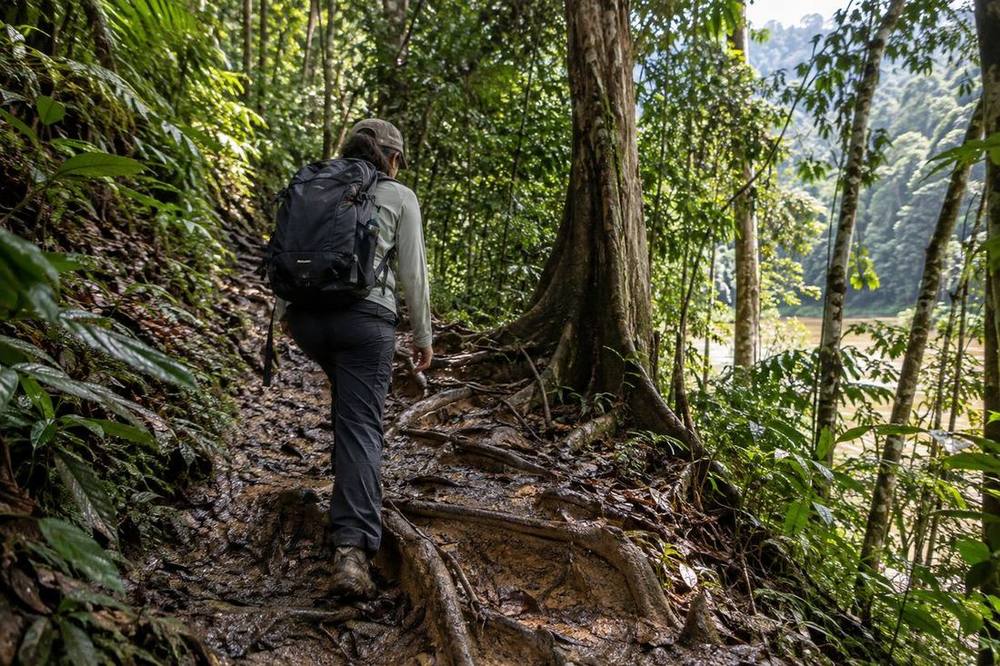
The rule is simple: everything should dry fast. Cotton stays wet for days in the humidity and gets heavy and smelly.
- 2 quick-dry long-sleeved shirts. Long sleeves protect against scratches, mosquitoes and sun. Light colours make it easier to spot leeches.
- 2 pairs of quick-dry long trousers. Thin hiking pants, not jeans. Tuck them into your socks.
- 1 set of dry clothes for the evening. Keep these sealed in a dry bag. Changing into dry clothes at night is the best feeling in the jungle.
- 3–4 pairs of hiking socks. Synthetic or merino. Feet stay wet, so spare socks matter.
- Underwear that dries fast. Synthetic sports underwear works well.
- A light layer for the evening. Mulu’s packing list suggests a very light shawl or jacket for evenings.
- Sleepwear if you are staying in a lodge or hostel.
Footwear
Good shoes are the most important thing on this list. Trails are muddy, rooty and slippery, and you may cross streams.
- Trail shoes or boots with strong grip. Mulu’s site recommends non-slip closed footwear for general use, rubber shoes for the Pinnacles climb, and sturdy boots for the Mulu Summit.
- Rubber “kampung adidas” shoes are popular with guides and locals in Malaysia. They are cheap, grip well in mud, drain fast and dry quickly. You can usually find them in small shops and markets in towns near the parks. They have little padding, so wear thick socks and test them on a short walk first.
- Sandals or flip-flops for the lodge, showers and evenings.
Leech protection
Leeches are part of rainforest life, especially after rain. Wikivoyage describes them as annoying rather than dangerous, and says you get used to them after a few days. Still, a little prep makes a big difference.
- Leech socks. These are tall, tightly woven cloth socks worn over your normal socks and pulled up over your trousers. Many trekkers find them the best defence of all.
- Tuck trousers into socks. It looks silly, but it keeps leeches out.
- Insect repellent. Spray on your shoes, socks and lower legs. Mulu lists insect repellent in its own packing list.
- Check yourself often. Stop every 20–30 minutes and look at your shoes, ankles and lower legs.
- If one attaches, stay calm. Slide a fingernail under the sucker end to break the seal, or let it drop off on its own. Pulling hard can leave the bite more irritated.
- Plasters and antiseptic. Leech bites can bleed for a while because of the anticoagulant in their saliva.
A common slip is to check only your feet. Leeches can climb, so check your waistband, neck and the back of your knees when you stop, and shake out your clothes and bag before you go into your room at night.

Rain gear and waterproofing
- Light rain jacket or poncho. Mulu lists a raincoat as essential. In the heat, a poncho can be cooler than a jacket.
- Rain cover for your daypack.
- Dry bags inside your pack for your phone, money, passport and spare clothes.
- Zip-lock bags for paper permits and small items.
There is more detail on this in Rain covers and dry bags: keeping gear dry in monsoon season.
Daypack essentials for the trail
For day treks, carry a small pack of 20–30 litres with:
- Water. More than you think you need. Ask your guide how much to carry for your route. A hydration bladder makes sipping easier.
- Electrolyte sachets. You sweat a lot, and plain water is not always enough.
- Snacks. Nuts, biscuits and energy bars. Tahan Outdoor notes you should not expect variety deep inside the park.
- Headlamp or torch with spare batteries. Essential for night walks and caves. Mulu lists a torchlight.
- Hat and sweatband. Mulu suggests both.
- Small towel to wipe sweat and rain.
- Basic first aid kit: plasters, antiseptic, blister pads, antihistamine and any personal medicine.
- Whistle in case you get separated.
- Offline maps. Tahan Outdoor says phone signal inside Taman Negara is basically nil.
- Cash in ringgit. Mulu has no ATMs. Small notes are best for permits and boat fees.
A simple way to plan food and water: check with your guide how long the walk will take, then carry water for the whole time plus a little extra, and one snack for every hour or two of walking. Running out of water halfway up a steep, humid trail is far worse than carrying a bit too much. On multi-day treks, your guide will usually explain where you can refill and how to treat the water.
Toiletries and health
- Sunscreen (sweat-resistant)
- Anti-chafing balm or talc for thighs and feet
- Hand sanitiser and biodegradable wet wipes
- Lip balm
- Antifungal powder for feet that stay wet for days
- Any prescription medicine. Ask a travel clinic about malaria before you go. The UK’s TravelHealthPro lists malaria risk in parts of Malaysian Borneo and says mosquito bite avoidance applies everywhere, while tablets are only advised for some areas and some higher-risk travellers.
What to leave behind
- Jeans and cotton T-shirts
- Heavy waterproof hiking boots that never dry (unless your guide recommends them)
- Too much electronics. Humidity is hard on gear.
- Strong perfumes, which can attract insects
- Valuables you do not need
Packing summary table
| Item | Taman Negara day walks | Multi-day guided trek | Mulu caves and trails |
|---|---|---|---|
| Leech socks | Yes | Essential | Yes |
| Trail shoes with grip | Yes | Essential | Essential |
| Rain jacket or poncho | Yes | Yes | Yes |
| Headlamp | For night walks | Essential | Essential |
| Dry bags | Yes | Essential | Yes |
| Cash in RM | For permits | Yes | Essential (no ATMs) |
| Guide | Not on short trails | Required | Book at Park HQ |
Before you go
A day or two before your trek, lay everything out, waterproof it, and check your shoes for grip. Book any guides early in busy months, and carry enough cash because you may not find an ATM nearby.
Then accept that you will be sweaty, muddy and a bit wet the whole time. With the right kit, that becomes part of the fun.
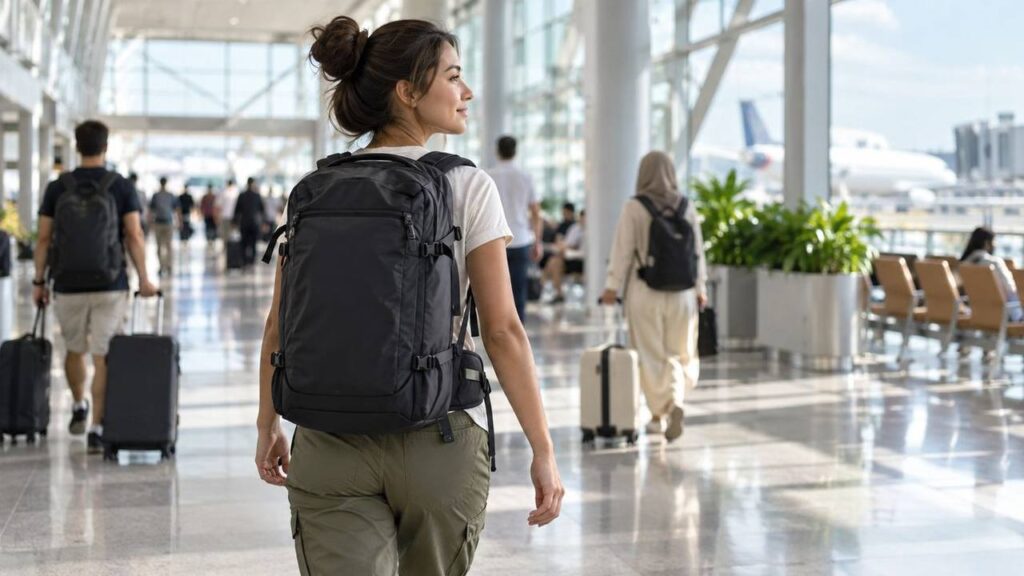
If you are flying to Borneo on a budget airline, check Carry-on-only backpacking: a one-bag packing list to keep your bag within the cabin limit. For the gadgets worth taking, see Travel gadgets worth bringing, and ones to leave behind.
Sources
- Tahan Outdoor, “Taman Negara: The Complete Outdoor Guide (2026)”: https://www.tahanoutdoor.com/blogs/camping/taman-negara
- Wikivoyage, Taman Negara: https://en.wikivoyage.org/wiki/Taman_Negara
- Mulu National Park (official), Plan Your Trip: https://mulupark.com/plan-your-trip/
- MetMalaysia, Weather Phenomena (monsoon seasons): https://www.met.gov.my/en/pendidikan/fenomena-cuaca/
- TravelHealthPro (NaTHNaC), Borneo (Malaysia): https://travelhealthpro.org.uk/country/138/borneo-malaysia (checked Oct 2026)